250 GSM vs 300 GSM Duplex Board: Key Differences
Choosing between 250 GSM and 300 GSM board is a balance of carton strength, print quality, material use, and cost. In general, 250 GSM duplex board suits compact, lightweight cartons. 300 GSM duplex board offers greater stiffness for larger packs, moderate loads, and packaging that needs a more substantial feel.
However, GSM alone does not define duplex board quality or exact thickness. Fibre composition, density, moisture, coating, and production methods also affect performance. This guide compares both options so you can make a practical choice for printing, converting, and packaging.
What Does GSM Mean in Duplex Board?
GSM Measures Basis Weight, Not Thickness
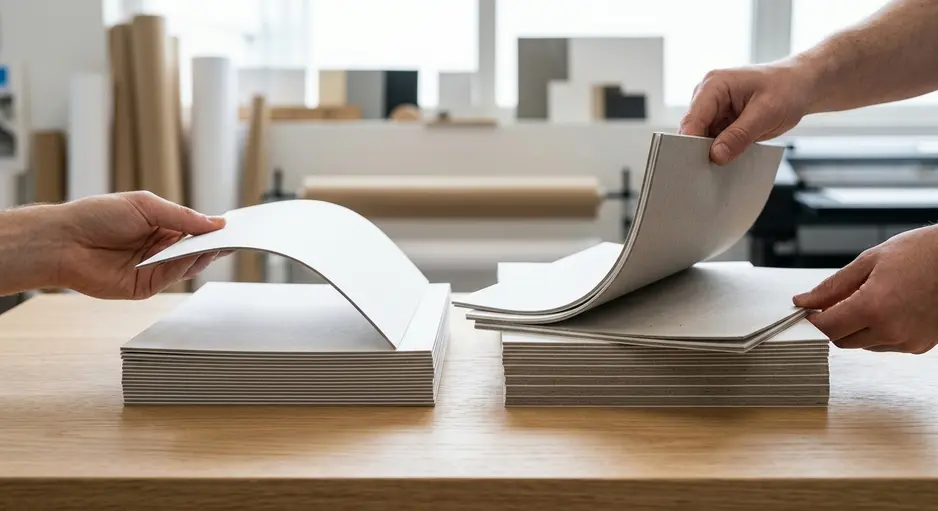
GSM means grams per square metre. It describes the basis weight of paper or board under defined test conditions. ISO 536 is a widely used standard for determining grammage.
A one-square-metre sheet of 250 GSM board theoretically weighs 250 grams. The same area of 300 GSM board weighs 300 grams. Therefore, 300 GSM uses 20% more material by weight for an equal sheet area.
Duplex Board Thickness and Caliper Measurement
Caliper is the physical thickness of a sheet. It is normally stated in microns or millimetres and may be tested using ISO 534. Although a heavier board is often thicker, there is no universal GSM-to-thickness conversion.
Two boards with the same grammage can have different calipers because of fibre furnish, density, bulk, coating weight, moisture, and manufacturing methods. Buyers should request the technical data sheet and check the stated caliper measurement rather than estimating thickness from GSM.
250 GSM vs 300 GSM Duplex Board at a Glance
- Basis weight: 250 g/m² compared with 300 g/m².
- Material use: The heavier option uses about 20% more material by area.
- Typical stiffness: 250 GSM provides moderate stiffness, while 300 GSM is usually stiffer when comparing the same grade.
- Packaging load capacity: The lighter board suits low loads; the heavier board is a better starting point for moderate loads.
- Carton durability: 300 GSM usually resists panel deformation and handling pressure more effectively.
- Folding: 250 GSM is often easier to fold, while 300 GSM needs a suitable crease setup.
- Cost per sheet: 250 GSM is generally less expensive for equal sheet dimensions.
- Shipping weight: 300 GSM adds weight to purchasing, storage, and outbound logistics.
- Common uses: Lightweight cartons and sleeves for 250 GSM; larger or more rigid-feel cartons for 300 GSM.
These are relative differences, not fixed performance values. Results vary with the board mill, fibre structure, coating, grain direction, carton design, and converter settings.
The 20% Weight Difference in Practice
Consider 1,000 sheets, each measuring one square metre. The 250 GSM order would weigh about 250 kg, while the 300 GSM order would weigh about 300 kg. That extra 50 kg can affect material consumption, freight charges, storage, and handling.
Finished dimensions and cutting waste also influence the actual order weight. Compare total usable yield rather than looking at grammage in isolation.
How Do Strength and Durability Compare?
Bending Stiffness and Carton Shape
Grade for grade, 300 GSM normally has greater bending stiffness. It is more likely to resist bowing on broad carton panels and retain its shape on the shelf. ISO 2493 provides methods for assessing bending resistance.
Still, duplex board strength depends heavily on thickness, density, structure, and grain direction. Machine-direction stiffness can differ from cross-direction stiffness. Carton layouts should place the grain in the correct direction for reliable folding and panel support.
Compression Strength and Packaging Load
A stiffer board can improve sidewall stability and resistance to pressure during packing, stacking, and retail handling. For this reason, 300 GSM is often safer for larger cartons or products that push against the panels.
Neither grade should be treated as a replacement for corrugated board in heavy-duty shipping cases. Product weight, carton dimensions, pallet patterns, humidity, and distribution conditions all affect compression strength and packaging load capacity.
Folding Endurance and Carton Durability
Heavier board is not automatically crack-proof. Folding endurance also depends on moisture conditioning, grain direction, coating flexibility, and the depth and width of each crease. Poor settings may split the coated surface or create spring-back.
For example, a small soap or lightweight accessory carton may perform well in 250 GSM. A larger personal-care kit or heavier retail item may need 300 GSM to reduce bulging, denting, and corner damage.
Which Board Performs Better for Printing?
Surface Smoothness and Coating Quality
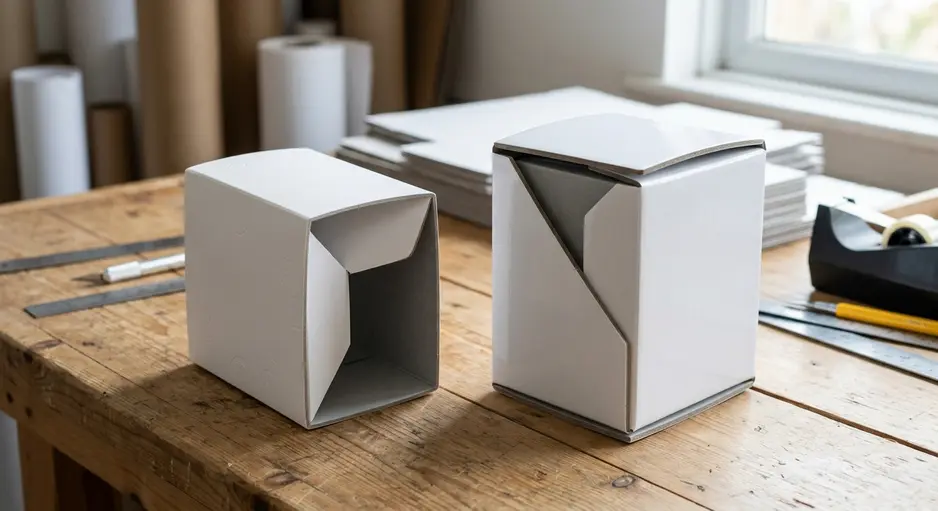
Higher GSM does not guarantee better printing. Surface smoothness, coating uniformity, and shade consistency have a more direct effect on the result. A clean, even coated face supports sharper detail and more stable colour.
Grey-back and white-back duplex grades may offer different appearance, opacity, and presentation. The right choice depends on whether the reverse side remains hidden or forms part of the visible pack.
Ink Absorption and Print Finish
Good coating quality helps control ink absorption and ink holdout. It can improve dot sharpness, colour consistency, gloss, and varnish response. An uneven coating may create mottling or dull areas, regardless of board weight.
Offset and Digital Printing Checks
Before ordering duplex board for printing, confirm that it is compatible with the intended press and finishing line. Test registration, drying, rub resistance, and lamination adhesion. If required, also test foil stamping, embossing, varnish, or UV coating.
A production trial is especially useful when artwork has heavy ink coverage. It shows how the board, coating, ink system, and machine settings work together.
Die-Cutting, Creasing, and Carton Conversion
Die-Cutting Performance
The 300 GSM grade generally needs cutting pressure and tooling suited to its greater resistance and possible added caliper. Clean edges, limited dust, and consistent cuts are useful signs of good die-cutting performance.
The lighter option may convert more easily on small carton designs. However, machine speed, cutting rules, board moisture, and tool condition remain important for both grades.
Creasing Performance and Fold Quality
An incorrect crease can cause surface cracking, uneven folds, panel bulging, or spring-back. The crease rule and channel must match the board’s actual caliper, not just its GSM.
While 250 GSM is usually easier to fold, it may lack rigidity across large unsupported panels. Properly converted 300 GSM board can create sharper folds and a more substantial carton. Its creasing performance depends on accurate setup.
Test Before a Large Run
Create a printed and converted prototype using the actual board, grain direction, artwork coverage, coating, adhesive, and finishing process. Testing a plain sample alone may not reveal cracking, glue failure, colour variation, or folding issues that appear after production.
Should You Choose 250 GSM or 300 GSM for Cartons?
Choose 250 GSM for Lightweight Packaging When:
- The product is small and light.
- The carton has short panels with little unsupported area.
- The pack is mainly for presentation rather than protection.
- Lower material use and shipping weight are priorities.
- An insert or internal support carries part of the load.
Common duplex board applications may include soap cartons, small cosmetic boxes, stationery packs, tags, backing cards, and promotional sleeves. Lightweight food sleeves may also be possible when the complete packaging system meets applicable food-contact rules.
In these cases, 250 GSM duplex board for lightweight packaging can provide a practical mix of printability, foldability, and cost control.
Choose 300 GSM for Rigid Packaging When:
- The product is moderately heavy or presses against the panels.
- The carton has wider or taller faces.
- Better shelf shape and stacking stability are needed.
- The pack will face frequent handling during distribution.
- A firmer, more premium feel supports the brand presentation.
Typical uses may include personal-care kits, larger cosmetic cartons, small electronics accessory boxes, and promotional gift packs. Healthcare cartons may also use this grade when it meets an approved packaging specification.
When Neither GSM Is the Right Choice
Heavy, fragile, chilled, humid, or export-shipped products may need a higher-GSM solid board, folding boxboard, solid bleached board, or corrugated packaging. Select the structure through product testing and realistic supply-chain trials rather than GSM alone.
How to Compare Duplex Board Quality and Cost
Do Not Compare Cost per Sheet Alone
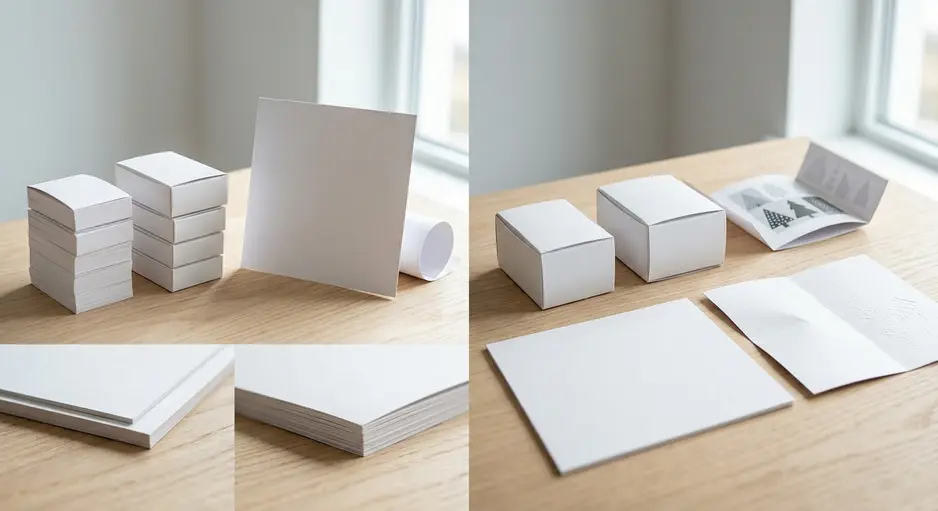
A lower price may not provide a lower finished-carton cost. Compare sheet dimensions, usable yield, cutting waste, rejection rates, downtime, freight, and storage. Board that cracks, warps, prints poorly, or causes slow conversion can be expensive in practice.
Specifications to Request from a Supplier
- Grammage and tolerance under ISO 536
- Caliper and tolerance under ISO 534
- Moisture content and grain direction
- Stiffness in the machine and cross directions
- Burst strength where relevant, such as testing under ISO 2759
- Cobb value or water absorptiveness under ISO 535
- Surface smoothness and coating consistency
- Brightness, whiteness, and shade
- Fibre furnish or recycled content
- Certifications, test reports, and batch traceability
Review the manufacturer’s technical data sheet and certificate of analysis. Published values should state the test method and tolerances so that future batches can be checked against an approved specification.
A Proven Selection Process
- Define the product weight and carton dimensions.
- List printing, coating, and finishing requirements.
- Request samples of both options.
- Produce cartons on the intended converting equipment.
- Test filling, folding, stacking, drops, and transport handling.
- Compare the total converted-carton cost.
- Approve a measurable specification before bulk ordering.
Work with an experienced manufacturer, exporter, or packaging supplier that can discuss specifications, samples, availability, and converting needs. Buyers can contact Edicon Paper Product to discuss suitable duplex board options before planning a bulk order.
Explore 250 GSM & 300 GSM Duplex Board
Make the Right Duplex Board Choice
Choose 250 GSM for compact, lightweight, and cost-sensitive cartons. Choose 300 GSM when you need better stiffness, durability, or a more substantial feel. In every case, assess GSM with caliper, board structure, coating, printability, and conversion results.
Before placing a bulk order, request samples and technical specifications, then test a finished prototype. Contact Edicon Paper Product to discuss specification requirements and product availability for your packaging project.
Frequently Asked Questions
1. Is 300 GSM duplex board thicker than 250 GSM?
It is generally thicker when both boards come from the same grade and manufacturer. However, grammage and thickness are different measurements. Fibre composition, density, coating, and moisture affect the result, so confirm the actual caliper on the technical data sheet.
2. Is 300 GSM duplex board always stronger?
It is usually stiffer and more resistant to deformation when compared grade for grade. It is not always stronger in every test. Fibre quality, board construction, moisture, thickness, coating, and grain direction can change its performance.
3. Can 250 GSM duplex board be used for product cartons?
Yes. It can work well for small, lightweight products with short carton panels and limited loads. Build a prototype using the final dimensions, product weight, artwork, and finishing process before approving it for production.
4. Which is better for printing: 250 GSM or 300 GSM?
Neither option is automatically better. Surface finish, coating consistency, ink holdout, press settings, and drying conditions have a greater direct effect on print quality. Test the intended grade with the actual artwork and finishing process.
5. How much heavier is 300 GSM board?
For the same sheet area, it has 20% more basis weight than 250 GSM. One square metre weighs approximately 300 grams rather than 250 grams. Order size, sheet dimensions, and waste determine the total freight difference.