Best Duplex and Triplex Board Exporter & Supplier to USA
Reliable paperboard can improve print quality, protect products, and reduce waste during carton production. For US importers, however, choosing a supplier involves more than comparing the price per ton. The board must also perform well during printing, creasing, die cutting, folding, and shipping.
Buyers should review grammage, caliper, surface smoothness, stiffness and strength, moisture resistance, and batch consistency. Export packing and documentation are equally important. This guide explains how to evaluate a duplex board exporter to USA and select the right material for your packaging operation.
What Are Duplex and Triplex Boards?
Duplex Board Construction and Surface Options
Duplex board is a multi-ply paperboard packaging material used for printed boxes and folding cartons. Its top surface may be coated to provide a smoother base for text, graphics, and brand colors. The reverse side can vary based on the grade and intended application.
Common options include coated paperboard, uncoated paperboard, grey back board, and white back board. Grey back grades are often considered for cost-focused packaging. White back grades may suit cartons where the inside or reverse surface remains visible.
The coating and fiber structure affect printing compatibility, folding performance, and final appearance. Buyers should therefore specify more than the product name when requesting samples or quotations.
What Is Triplex Board?
The meaning of triplex board may vary between markets and suppliers. It often refers to a multi-layer board selected for a clean appearance, uniform surface, or improved rigidity. Some buyers use triplex board for packaging that needs a more refined presentation.
Because the term is not fully standardized, buyers should confirm the actual ply construction, coating, back color, and performance values. This is especially important when comparing offers from more than one triplex board manufacturer in India.
Why Technical Data Sheets Matter
Two products with the same commercial grade name can behave differently on a printing or converting line. A technical data sheet should define measurable properties such as GSM, caliper, moisture, stiffness, brightness, Cobb value, and ply bond.
Duplex vs. Triplex Board: Which Is Better for Packaging?
Duplex Board for Cartons
Duplex paper board for packaging offers a practical balance of printability, strength, and cost. Depending on the selected grade, it may be used for household goods, footwear, hardware, automotive parts, general retail products, and secondary pharmaceutical packaging.
Duplex board for cartons may also be considered for dry-food outer boxes when the complete packaging structure has suitable liners or barriers. Buyers must confirm all food-contact and product-safety requirements before use.
Triplex Board for Cartons
Triplex board for cartons may suit packaging where appearance is a high priority. Potential applications include cosmetics, personal care products, premium retail items, and consumer electronics accessories.
It may be chosen when the converter needs a clean reverse side, consistent surface quality, or a polished printed result. Actual suitability still depends on the supplier’s paperboard packaging specifications and the converter’s production process.
Quick Selection Table
| Selection Factor | Duplex Board | Triplex Board |
|---|---|---|
| Typical cost level | Usually more economical | Often higher |
| Back appearance | Grey or white options | Must be confirmed |
| Print presentation | Good to excellent | Often selected for premium results |
| Common use | General folding carton applications | Appearance-focused cartons |
| Main buying check | Strength-to-GSM balance | Construction and surface consistency |
Neither option is automatically better. The right choice depends on the carton design, packed product, printing method, distribution route, and target appearance.
What Paperboard Specifications Should US Buyers Compare?
Grammage Options and Caliper
GSM measures the weight of paperboard in grams per square meter. It is an important buying detail, but a higher GSM does not always mean better carton performance. Fiber composition, density, caliper, and ply construction also affect strength.
Select grammage options according to the box dimensions, product weight, stacking pressure, and shipping conditions. A small cosmetic carton and a larger hardware box may require very different board properties.
Surface Smoothness and Printing Compatibility
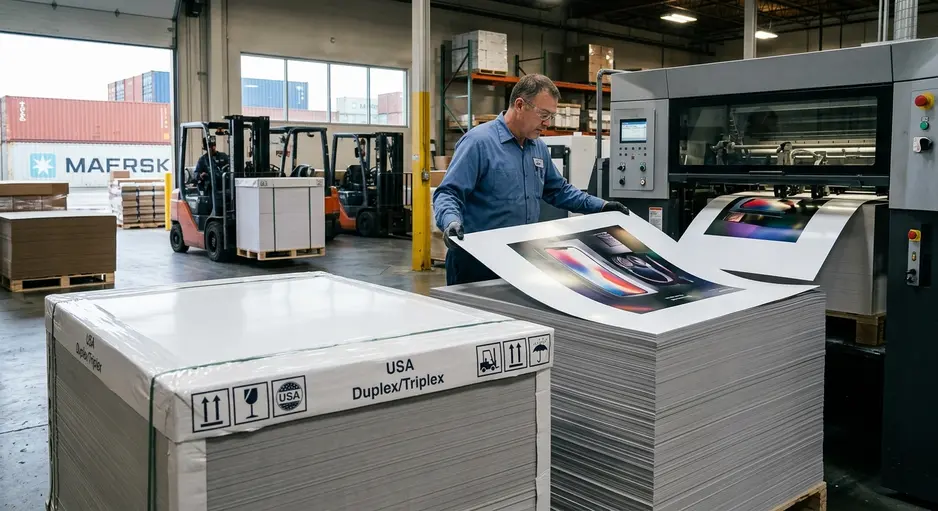
A smooth and consistent surface can improve ink coverage, fine text, and color reproduction. Buyers should confirm whether the chosen grade is suitable for offset or flexographic printing and any planned finishing process.
Finishing may include water-based or UV coating, lamination, varnishing, foil stamping, or embossing. Test ink adhesion and color quality before committing to a commercial order, especially when brand colors must match closely.
Stiffness, Strength, and Die-Cutting Performance
Good stiffness helps a carton hold its shape on the shelf and during handling. Buyers should review machine-direction and cross-direction values because paperboard behaves differently across the grain.
Converting trials should also check fold quality, edge cracking, scoring accuracy, ply separation, and die cutting performance. Clean cuts and controlled creases help packaging lines run with less waste and fewer interruptions.
Moisture Resistance and Storage
Humidity can affect flatness, curl, stiffness, print registration, and carton forming. Export orders should have suitable moisture-protective wrapping and secure storage conditions after arrival.
Standard board should not be described as waterproof without supporting test results. If the package may face moisture, request the relevant Cobb value and details of any coating or barrier.
Paperboard Specification Checklist
- Product grade and back color
- Coated or uncoated surface
- GSM tolerance and caliper
- Sheet size or reel dimensions
- Grain direction
- Brightness, whiteness, gloss, and smoothness
- Moisture content and Cobb value
- Machine and cross-direction stiffness
- Quantity and dimension tolerances
- Wrapping, pallet, and container requirements
How Does a Reliable Exporter Maintain Quality?
Approve Samples Before Production
A structured sample process helps prevent costly problems after the order arrives. Buyers can follow these steps:
- Share the carton design, packed weight, and performance needs.
- Request a representative sample from a current production lot.
- Print, coat, crease, and die-cut the sample.
- Assemble the carton and test it with the actual product.
- Approve a reference sample and written specification.
- Add agreed tolerances to the purchase order.
Quality Checks for Box Production
Relevant checks may include grammage, caliper, moisture, shade, coating quality, stiffness, and ply bond. Sheet squareness, reel winding, width, and edge condition can also affect production efficiency.
Visual inspection should identify dust, spots, warping, coating defects, and edge damage. Buyers should ask each supplier which tests it performs and request records where needed. Testing claims should be accepted only when they can be verified.
Export Packing and Shipment Protection
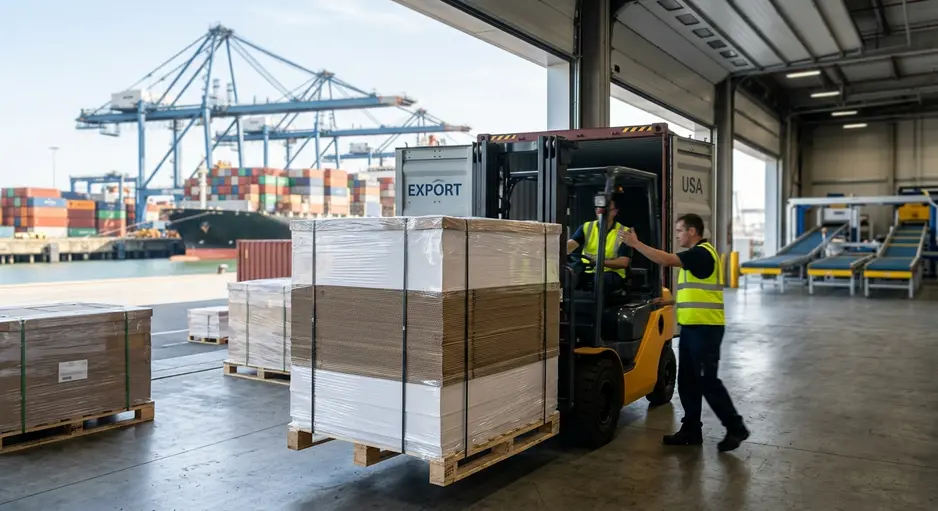
Ocean transport can expose paperboard to humidity, compression, and movement. Protective wrapping, reinforced edges, secure palletization, and clear lot identification can reduce transit damage.
Container loading should limit movement and uneven pressure. When wood packaging is used, buyers should confirm whether applicable ISPM 15 requirements have been met.
How to Choose a Duplex Board Exporter to USA
Evaluate Capability, Not Just Price
A low unit price can become expensive if the board creates print waste, cracking, delays, or rejected cartons. Ask a potential supplier for its technical data sheets, available grades, size capabilities, minimum order quantity, lead times, and quality procedures.
Buyers should also review traceability, lot identification, complaint handling, and replacement terms. When assessing a triplex board exporter to USA, ask how the supplier defines triplex and which values are guaranteed.
Verify Certifications and Compliance Claims
Requirements vary by end use. A buyer may need responsible-fiber documentation, recycled-content records, quality-management certificates, restricted-substance declarations, or food-contact documents.
Do not rely on a logo or general statement. Request the certificate number, scope, issuing body, and validity date. Food-contact suitability should be checked against the full packaging structure and intended conditions of use.
Compare Total Landed Cost
Compare the complete cost rather than the factory price alone. Include inland transport, ocean freight, insurance, duties, customs fees, port handling, storage, financing, and production waste.
Lead-time risk also has a cost. Confirm the Incoterm, shipment schedule, payment terms, free-time conditions, and responsibility for documents before issuing an order.
Questions to Ask an Indian Manufacturer
- How is the duplex or triplex grade constructed?
- Which GSM, caliper, and size tolerances are guaranteed?
- Can samples come from a current production lot?
- Are sheets and reels both available?
- Which Incoterms and export documents are offered?
- How are quality claims reviewed after delivery?
Why Source Duplex and Triplex Board from India?
US importers may evaluate India for access to different grades, grammages, sheet formats, and reel requirements. Custom dimensions may also help converters reduce trimming waste, subject to the manufacturer’s capabilities and minimum quantities.
The commercial benefit depends on order volume, freight, lead time, quality consistency, and landed cost. Buyers should compare suppliers through samples and documented specifications instead of assuming that products from one country will perform alike.
Practical Packaging Examples
- Cosmetics carton: Focus on smoothness, brightness, shade consistency, and compatibility with foil or embossing.
- Hardware carton: Give priority to stiffness, puncture resistance, fold strength, and stacking performance.
- Food outer box: Confirm odor, migration, barrier, and contact requirements for the full packaging system.
- E-commerce retail box: Review compression, scuffing, humidity exposure, and transport handling.
Evaluating Edicon Paper Product
US buyers looking for a duplex board manufacturer in India can contact Edicon Paper Product to discuss available grades, technical specifications, samples, minimum quantities, and export terms.
Before placing an order, request current documents and confirm production capabilities directly with the company. This approach helps ensure that the proposed material matches the printing, converting, packing, and delivery requirements of the project.
How to Request a Quote and Avoid Ordering Mistakes
Information to Include in Your RFQ
- Duplex or triplex grade
- Coated or uncoated surface
- Grey back or white back
- Required GSM, caliper, and tolerances
- Sheet or reel size and grain direction
- Carton application and packed product
- Printing and finishing methods
- Monthly or annual volume
- US destination port or ZIP code
- Preferred Incoterm and delivery date
- Testing, certification, and packing needs
Common Procurement Mistakes
Common mistakes include buying on GSM and price alone, failing to define triplex construction, and ignoring grain direction. Skipping a production trial can also lead to unexpected cracking, curl, or print issues.
Buyers should not compare an FOB quote with a landed quote or accept compliance claims without documents. Request a technical data sheet, current sample, and written export quotation before approving commercial production.
Best Duplex and Triplex Board Exporter & Supplier to USA
Choose Paperboard by Performance, Not Name Alone
The best supplier is one that can match the required specification, provide consistent material, protect it during shipment, and support clear commercial terms. Compare printability, stiffness, moisture behavior, converting performance, and landed cost before making a decision.
When evaluating a duplex board exporter to USA or a triplex supplier, begin with a detailed RFQ and a representative production sample. US buyers can contact Edicon Paper Product to request available product information, samples, and export terms for review.
Frequently Asked Questions
1. What is the difference between duplex and triplex board?
Duplex and triplex products may differ in ply construction, back appearance, rigidity, and surface quality. Since naming practices vary, buyers should compare technical data sheets, physical samples, and converting results instead of relying only on the grade name.
2. Is duplex board suitable for folding cartons?
Yes. Duplex board is commonly considered for folding cartons when the correct coating, GSM, stiffness, back color, and moisture properties are selected for the product and distribution conditions.
3. Which GSM duplex board is best for packaging boxes?
There is no single best GSM. The correct value depends on carton size, product weight, stacking load, printing process, and shipping environment. A physical carton trial is the safest way to confirm performance.
4. Can duplex and triplex boards be recycled in the USA?
Many paperboard products may be recyclable, but local acceptance varies. Coatings, laminates, barriers, adhesives, and contamination can affect recovery. Buyers should check the rules of the relevant municipal recycling program.
5. How can I verify a duplex and triplex board supplier to USA?
Review technical data, samples, certificates, test reports, export documents, payment terms, and complaint procedures. A production-scale trial offers stronger evidence than a small visual sample alone.