Duplex Kraft Board: Benefits, Applications and Key Features
Choosing packaging board is often a balancing act. It must look good, protect the product, run well on converting equipment, and stay within budget. Duplex kraft board meets these needs by combining a smooth printable face with a strong kraft-coloured reverse.
This multilayer paperboard structure is widely used for cartons, sleeves, backing cards, and other printed packs. Yet GSM alone does not define the right grade. Carton size, product weight, printing method, storage conditions, and finishing needs all affect the choice.
What Is Duplex Kraft Board?
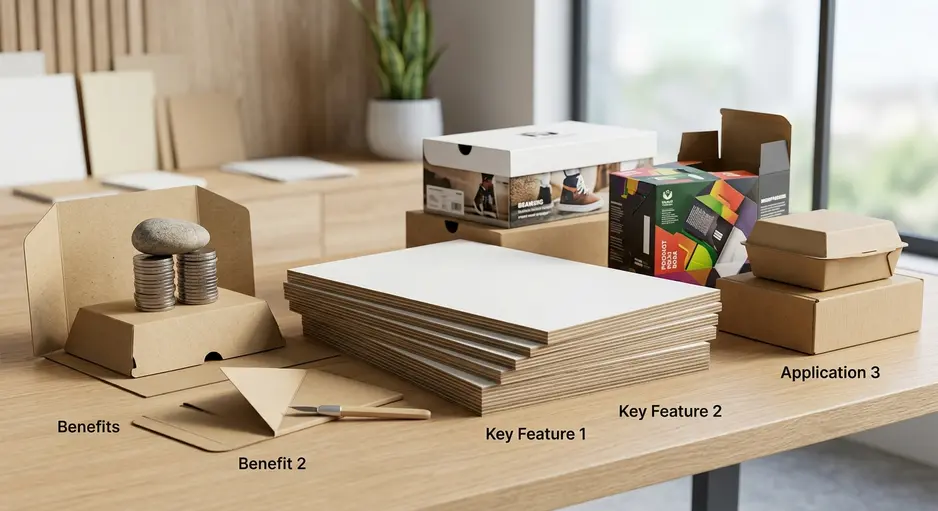
Duplex kraft board is a paperboard made with several fibre layers. It normally has a white coated top surface and a brown kraft back. Each layer serves a different purpose, helping the board deliver visual appeal and structural support.
How the multilayer structure works
The top ply provides a smooth base for graphics, product details, barcodes, and branding. Middle plies add bulk and stiffness. The reverse ply gives the board its familiar brown appearance.
The exact fibre mix varies by grade and producer. Some products may contain recycled fibre, while others use a mix of recycled and virgin material. A brown reverse does not, by itself, prove recycled content or better environmental performance.
White coated face and brown kraft back
The coated face can support clear text and rich colours when matched with a suitable printing process. The brown kraft back creates a natural visual contrast. This can work well for brands seeking a simple or kraft-style interior.
Kraft duplex board should not be confused with every brown paperboard product. “Kraft board” is a broad term, while duplex board usually refers to a layered sheet with different front and reverse surfaces.
Kraft-back, grey-back, and other boards
- Kraft-back duplex: Usually has a coated white face and brown reverse. It is often chosen for branded retail cartons.
- Grey-back duplex: Has a white printable face and grey reverse. It is common in general folding-carton production.
- Folding boxboard: Often has a white or cream reverse and is used for lighter premium cartons.
- Corrugated board: Contains a fluted layer and is designed mainly for shipping, transit, and heavier protection.
Duplex Kraft Board Key Features
The performance of packaging kraft board depends on more than its colour or grammage. Buyers should review stiffness, strength, print surface, moisture response, and converting behaviour.
Bending stiffness and dimensional stability
Bending stiffness helps a carton keep its shape during packing, stacking, and retail display. It also reduces panel bowing. Stiffness depends on caliper, fibre direction, board construction, and moisture content, so two boards with the same GSM may perform differently.
ISO 536 is commonly used to measure grammage, while ISO 534 covers thickness and density. ISO 2493 provides methods for assessing bending resistance.
Burst strength and tear resistance
Burst performance matters when a pack faces pressure during handling or transport. Tear resistance can help reduce damage near openings, corners, and cut areas. However, no grade should be described as having high burst strength without test data.
ISO 2759 can be used to assess the bursting strength of board. Test results should be compared with product weight, carton design, stacking load, and distribution conditions.
Printability and ink adhesion
A uniform coating supports clean images, readable text, and steady colour. Surface smoothness, brightness, ink holdout, and drying behaviour all influence print quality. A coated kraft board may suit offset, flexographic, gravure, or digital printing, depending on the grade.
Colour-critical work should always include a press trial. Testing helps confirm ink adhesion, drying time, rub resistance, dot gain, and finishing performance before a full order is produced.
Folding performance and die cutting
Good die cutting compatibility supports clean edges and accurate carton blanks. Creasing quality is just as important. A poor crease can cause cracking, ply separation, or uneven folds.
Board thickness, grain direction, moisture, crease width, and rule height affect folding performance. Embossing, foil stamping, varnishing, and lamination may also be possible, but their suitability must be checked for each grade.
Moisture tolerance
Standard duplex paperboard is not waterproof. Some grades can handle limited humidity, but prolonged exposure to water may reduce stiffness or damage the surface.
ISO 535 measures water absorptiveness through the Cobb method. A lower Cobb value can indicate lower water absorption under set test conditions. Special coatings or barriers may be needed for damp or chilled environments.
Main Duplex Kraft Board Benefits
Strong shelf presentation
The white face gives brands a clear surface for logos, product images, ingredients, instructions, and legal text. The brown reverse adds a natural-looking contrast without limiting the quality of exterior graphics.
Useful protection without over-specification
The right mix of caliper, stiffness, and carton design can protect a product without using more material than needed. This does not mean duplex board always uses less fibre. Samples and tests are needed to confirm that a lighter structure performs safely.
Reliable carton manufacturing
Consistent board can improve feeding, printing, die cutting, creasing, folding, and gluing. These duplex kraft board benefits are important in high-volume production, where small variations can lead to waste or machine delays.
Balanced cost and performance
This board is often considered when buyers need better presentation than basic commodity packaging without moving to a higher-cost premium grade. Total cost should include print waste, converting speed, rejects, storage, and product damage—not only the price per tonne.
Recyclability potential
Paperboard is generally recyclable where suitable collection and processing systems exist. However, plastic films, foil, wax, and some barrier coatings can affect repulpability. Recyclability should therefore be assessed for the complete pack, not the board alone.
Common Duplex Kraft Board Applications

Folding cartons
Duplex kraft board for folding cartons can be used for household goods, small appliances, hardware, accessories, shoes, textiles, spare parts, and general merchandise. The selected grade must match the carton dimensions and product weight.
Retail packaging
Common uses include cosmetics boxes, personal-care cartons, toy packs, stationery boxes, product sleeves, and promotional displays. Duplex kraft board for retail packaging should offer steady colour, good rub resistance, and enough stiffness for shelf display.
Printing applications
Duplex kraft board for printing applications may be converted into cartons, tags, inserts, backing cards, sleeves, and point-of-sale material. Print and finishing results depend on coating quality, surface treatment, press settings, and ink selection.
Food packaging suitability
Some grades may be suitable for dry-food cartons or secondary food packaging. Direct food contact is different from indirect contact. A recycled kraft board must not be assumed safe for direct contact simply because it is paper-based.
Buyers should request food-contact declarations, migration data, traceability records, and other documents required for the target market. Relevant frameworks may include FDA requirements in the United States and Regulation (EC) No. 1935/2004 in the European Union.
For example, a snack brand may choose a kraft-back carton for vivid exterior graphics and a natural interior. A separate certified inner pouch or approved barrier can then manage direct contact with the food.
How to Choose the Right Grade
Match GSM and caliper to the pack
Grammage does not predict carton performance on its own. Consider product weight, unsupported panel size, stacking load, carton shape, and transport conditions. Build physical mock-ups and run packing or transit tests for a new design.
Review the technical data sheet
Ask the supplier for measurable values rather than broad claims. A useful specification checklist includes:
- Grammage and permitted tolerance
- Caliper or thickness
- Machine-direction and cross-direction stiffness
- Burst strength
- Cobb value
- Surface smoothness and brightness
- Moisture content
- Fibre or grain direction
- Recycled-fibre percentage
- Sheet size and dimensional tolerance
- Food-contact or sourcing certificates, when required
Test printing and conversion
Run ink drawdowns or press tests before approving a duplex kraft paperboard. Check ink drying, adhesion, rub resistance, scoring, folding, gluing, and die-cut cleanliness. Allow the material to acclimatize in the production area before evaluation.
Questions to ask a supplier
- Which carton types is the grade designed for?
- Which printing methods have been tested?
- Are batch test certificates available?
- Can the required GSM, sheet size, or reel width be supplied?
- What are the minimum order quantity and lead time?
- Is documentation available for recycled content or fibre sourcing?
Packaging buyers can contact Edicon Paper Product to discuss required specifications, print methods, carton uses, sizes, and documentation.
Printing and Carton Manufacturing Tips
Control board moisture
Store paperboard in a stable, dry area and let it adjust to the production environment. Very dry board may crack or develop static. Excess moisture can reduce stiffness and cause feeding or registration problems.
Check fibre direction
Grain direction affects panel rigidity and the way a crease folds. The carton designer, printer, and converter should agree on sheet layout before production. This can reduce cracking and improve the finished carton shape.
Set the correct crease geometry
Match creasing rules and channels to the board’s measured thickness. Trial runs should be checked for surface cracks, delamination, uneven folding, and weak corners.
Use compatible inks and adhesives
Select inks that suit the coated surface and press. Test adhesive on both coated and uncoated areas, as glue response may differ. Use lamination or heavy finishes only when they add needed protection or visual value.
Is Duplex Kraft Board Sustainable?
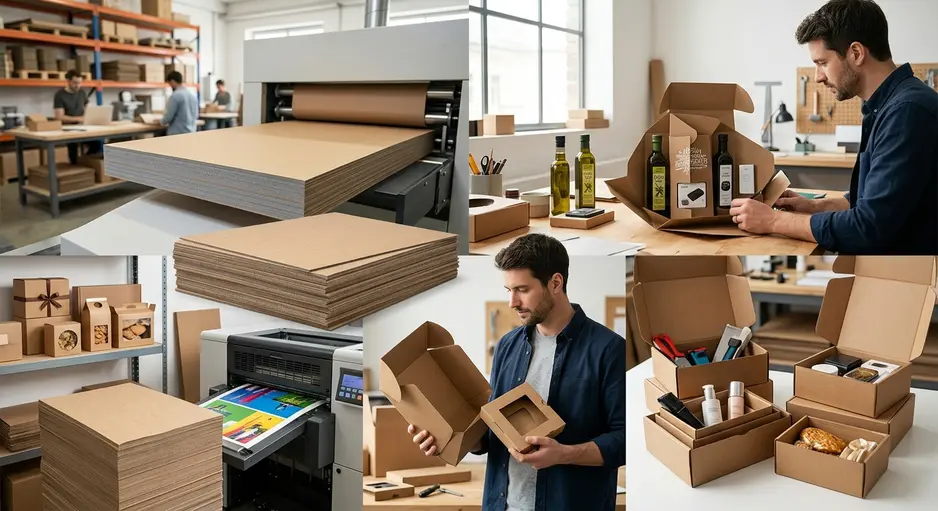
Duplex kraft board for sustainable packaging should be assessed with clear evidence. Recycled content, recyclability, and responsible sourcing are related concepts, but they do not mean the same thing.
Recycled content states how much recovered fibre is in the product. Recyclability describes whether the finished pack can be collected and processed. FSC or PEFC chain-of-custody certification relates to verified fibre sourcing and tracking.
To support a recyclable packaging material design:
- Reduce unnecessary plastic films and foil.
- Use removable or separable windows where practical.
- Check inks, coatings, and adhesives against local recycling guidance.
- Right-size cartons to reduce fibre use and transport volume.
- Lower board weight only after performance testing.
- Request proof for sourcing and recycled-content claims.
Avoid broad phrases such as “100% eco-friendly.” Environmental statements should be backed by certificates, recognised testing, or reliable life-cycle information.
Choose Performance Based on Evidence
Duplex kraft board combines a printable white face, brown kraft appearance, useful stiffness, and efficient converting performance. Its applications range from retail boxes and folding cartons to backing cards and printed sleeves.
The right choice should be based on technical data, samples, press trials, and packaging tests. To discuss duplex kraft board for packaging, contact Edicon Paper Product with your required GSM, sheet size, print process, end use, and compliance needs.
Frequently Asked Questions
1. What is duplex kraft board used for?
It is used for folding cartons, retail boxes, household product packs, backing cards, inserts, sleeves, and promotional materials. Approved grades may also be used for dry-food cartons or secondary food packaging.
2. Is duplex board stronger than ordinary kraft paper?
Paperboard is usually thicker and stiffer than kraft paper, making it more suitable for cartons. Actual strength depends on grammage, caliper, fibre mix, layer construction, moisture, and the test method used.
3. Can it be printed on both sides?
The coated white side is normally designed for higher-quality printing. The brown reverse may also be printed, but colour, smoothness, ink absorption, and image detail can differ. A print trial is recommended.
4. Which GSM is best for folding cartons?
There is no universal GSM. The correct value depends on carton size, product weight, stiffness, caliper, structural design, and delivery conditions. Samples and converting trials should be completed before production.
5. Is duplex kraft board waterproof?
No. Standard grades are not waterproof, although some provide limited moisture tolerance. Damp or chilled applications may require tested barriers, coatings, or an additional protective layer.