Duplex & Triplex Board for Bakery Product Packaging
Bakery boxes face more stress than they appear to. Butter can leave marks, chilled cakes can create condensation, and wide cartons may sag during delivery. Stacking and handling can also crush corners or damage decoration. For this reason, choosing a bakery packaging board involves more than comparing GSM.
Duplex and triplex board for bakery packaging are common options for printed cartons. The right choice depends on the product, box design, food-contact conditions and supply chain. This guide explains their differences, key properties, common uses and the questions buyers should ask before ordering.
Why Does Bakery Packaging Need the Right Board?
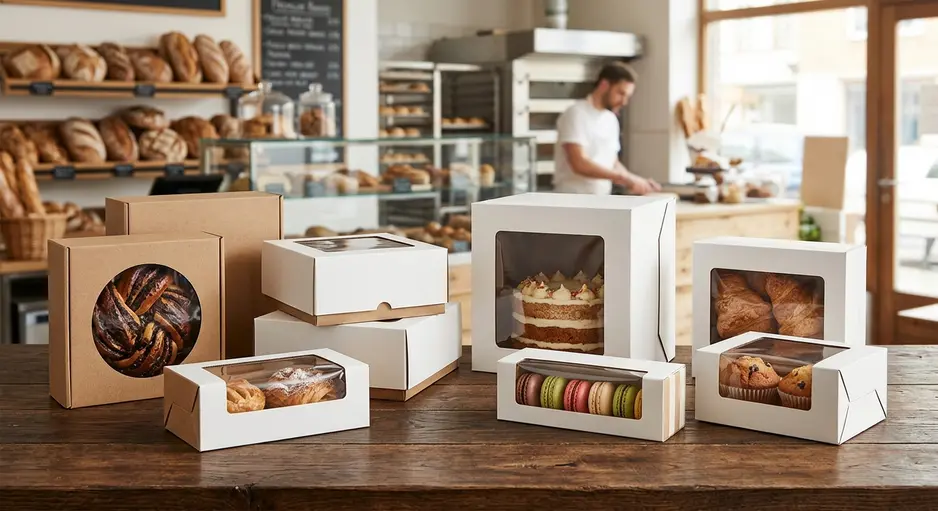
Bakery product protection during storage and delivery
A carton should protect the product from filling to final delivery. It must resist crushing, deformation, dust and handling contamination. It should also limit grease stains and cope with moisture created by chilled or warm products.
Last-mile delivery adds another challenge. A box that works well on a bakery counter may bow or open during a motorcycle journey. The board, locking system, internal tray and cake base must work together to provide bakery product protection.
Packaging as part of the customer experience
Customers often judge a bakery item before opening the box. Clean edges, accurate folds and bright printing can support a premium image. Surface smoothness also helps logos, colours and product details look sharp.
However, good printability does not always mean strong packaging. Grain direction, creasing, carton dimensions and product weight all affect the final packaging box structure. The best result comes from matching print quality with practical strength.
What Is the Difference Between Duplex and Triplex Board?
Duplex board for bakery packaging
Duplex board is a multi-ply paperboard that commonly has a smooth, coated printing side. The reverse may be grey, cream or white, depending on the grade. Grey-back options are often economical, while white-back grades offer a cleaner internal appearance.
Duplex board for bakery boxes is widely considered for pastry cartons, confectionery packs and standard cake boxes. It can offer a useful balance of stiffness, printing quality and cost. When recycled fibre is used, direct food contact should not be assumed. A liner, tray or other suitable barrier may be required.
Triplex board for bakery packaging
Triplex board generally refers to a three-layer or enhanced multi-ply construction. In many grades, it has a lighter and more uniform reverse side. This can improve the appearance of cartons that are opened at the point of sale.
Triplex board for bakery boxes may suit premium cakes, gift packs and confectionery cartons. It can also be considered where two-sided presentation or a specific stiffness profile is needed. Its performance still depends on fibre furnish, caliper, coating and moisture balance.
Duplex vs triplex board comparison
Typical construction
- Duplex: Coated multi-ply board with different face and reverse surfaces.
- Triplex: Three-layer or upgraded multi-ply board, depending on the producer.
Reverse appearance
- Duplex: Usually available with a grey or white back.
- Triplex: Often has a lighter or more uniform reverse.
Printing and presentation
- Duplex: Good colour printing quality on the coated face.
- Triplex: Strong print potential, with options for premium presentation.
Common application
- Duplex: Standard bakery cartons, pastry boxes and confectionery packaging.
- Triplex: Premium or structurally demanding cartons.
Cost position
- Duplex: Often the more economical choice.
- Triplex: May cost more due to its construction and finish.
The names alone do not confirm quality. Two boards with the same GSM can perform very differently. Buyers should compare caliper, stiffness, coating, fibre composition and tested converting results.
Which Properties Matter in Bakery Packaging Board?
Stiffness, rigidity and carton strength
Stiffness and rigidity help a box resist bowing, corner damage and panel collapse. They are important for stacked pastries and heavy celebration cakes. Yet a higher GSM does not always create a stronger carton.
Caliper, fibre direction, furnish and box design also affect carton strength. Wide unsupported panels may sag even when they use thick board. Reinforced corners, locking bases and a suitable cake pad can often improve performance.
Surface smoothness and colour printing quality
Coated paperboard can support offset printing and other compatible methods. A smooth surface improves ink holdout, dot detail and colour consistency. These features matter when packaging includes fine text, product images, foil or embossing.
Printing inks must also suit the intended use. Where migration is a concern, buyers should discuss suitable low-migration systems with their converter and ink supplier. EuPIA guidance can help inform ink selection for food packaging applications.
Folding performance and die-cutting compatibility
Good die-cutting compatibility helps create clean edges and accurate slots. The board should crease and fold without cracking along printed or coated areas. Grain direction, crease width, machine settings and board moisture all influence folding performance.
Converters should also test gluing, window patching, embossing and foil finishing when these processes are part of the design. Heavy coatings or poor moisture balance can lead to split folds and weak adhesive bonds.
Grease and moisture resistance
Butter, cream, oil and chocolate can move through untreated paperboard. Chilled products may also create condensation. Depending on the product, the carton may need grease resistance, moisture resistance or a separate food-grade packaging material inside it.
Water-based or other suitable barriers may improve protection. However, coatings, plastic films and laminates can affect repulpability. Barrier needs should therefore be balanced with recyclable packaging goals.
Which Board Is Best for Cakes, Pastries and Confectionery?
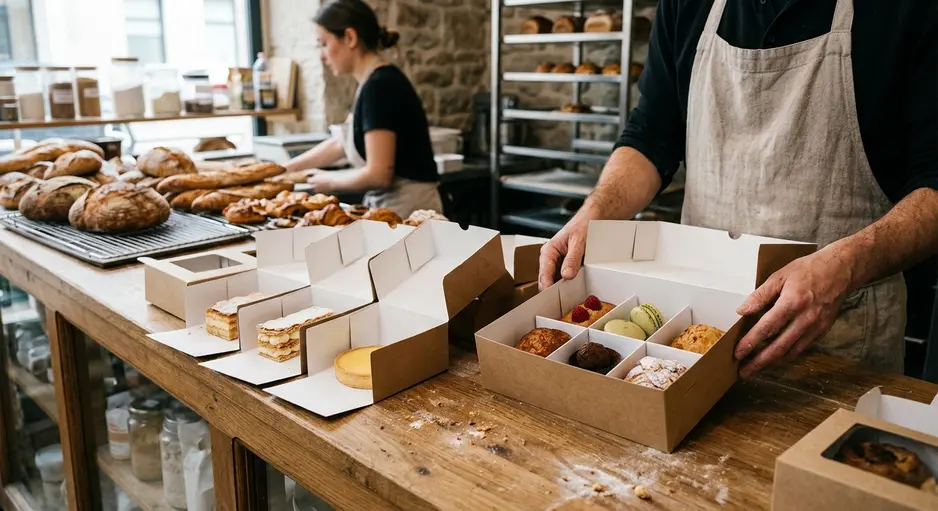
Duplex board for cake boxes
Duplex board for cake boxes can suit everyday retail cartons, especially when the cake rests on a separate food-safe base. A white-back grade may be preferred when customers can see the inside of the box.
Large or multi-layer cakes need more support. A light box may look stable on a counter but bow during delivery. In this case, a stronger grade, reinforced base or improved locking structure may be necessary.
Duplex board for pastry packaging
Duplex board for pastry packaging can work well for small folding cartons used for dry or moderately greasy products. Oily pastries may need a liner, coated tray or grease-resistant barrier.
Windows should be positioned with care. A large cut-out can weaken load-bearing panels and reduce stacking strength, even when the window film itself is strong.
Triplex board for cake boxes and premium cartons
Triplex board for cake boxes may be considered for gift cakes, premium confectionery and packs with printed interiors. Its cleaner reverse can add presentation value. Buyers should still test the actual board rather than assume it is stronger based on its name.
Quick product-to-board selection guide
- Cakes: Prioritise stiffness, base support, box height and moisture conditions.
- Pastries: Check grease control, fold quality and window placement.
- Biscuits: Focus on printability, compression strength and product movement.
- Chocolates: Consider odour neutrality, grease control and inner wrapping.
- Chilled or frozen products: Test condensation resistance, adhesive strength and low-temperature performance.
How Do You Select the Correct GSM and Box Structure?
Start with product weight and dimensions
There is no universal GSM for bakery carton board. A small pastry carton and a wide celebration cake box have different load demands. Begin with the filled weight, box dimensions, cake height and unsupported panel span.
Also consider stacking, transport distance, storage temperature and packing method. Automated lines may require tighter controls for feeding, folding and gluing than manual packing.
Evaluate more than paperboard GSM
Ask suppliers and converters to provide measurable data. Relevant properties may include:
- Grammage and caliper
- Machine and cross-direction bending stiffness
- Moisture content and Cobb value
- Grease resistance
- Burst or compression performance
- Surface strength and coating quality
- Fold, crease and adhesive performance
ISO and TAPPI test methods can support consistent comparisons. The chosen methods should match the intended board, package and performance risk.
Improve the packaging box structure
- Align grain direction with critical folds where possible.
- Add locking tabs or reinforced corners.
- Reduce wide, unsupported panels.
- Use a suitable cake board or internal tray.
- Add ventilation if warm products may create condensation.
- Run filled-box stacking, drop and delivery simulations.
Is Duplex or Triplex Board Safe for Food Packaging?
Confirm food-contact compliance
“Food grade” should be supported by documents for the intended use. Direct contact, indirect contact and use with an inner wrapper are different applications. A board suitable for one may not be suitable for another.
In India, buyers should review applicable FSSAI Packaging Regulations and relevant Indian Standards. Products for other markets may need to meet U.S. FDA requirements or the EU Framework Regulation (EC) No. 1935/2004 and Good Manufacturing Practice Regulation (EC) No. 2023/2006.
Request a declaration of compliance or suitability statement, fibre details, relevant test reports and information about coatings, inks and adhesives. Odour, taint, migration and traceability records may also be needed.
Recycled fibre and functional barriers
Recycled-fibre food packaging paperboard can be suitable for secondary cartons. Direct contact should not be assumed. A functional barrier, tray or primary wrapper may be needed to manage migration, grease and moisture risks.
Recyclable bakery packaging
Paper-based mono-material designs can make recovery easier. FSC or PEFC chain-of-custody information may also help buyers confirm responsible fibre sourcing.
Actual recyclability depends on local facilities and the complete pack. Films, metallic laminates, windows, adhesives, barrier coatings and food residue can change the result. Avoid absolute claims unless they are backed by package-specific evidence.
How to Choose a Bakery Packaging Board Supplier
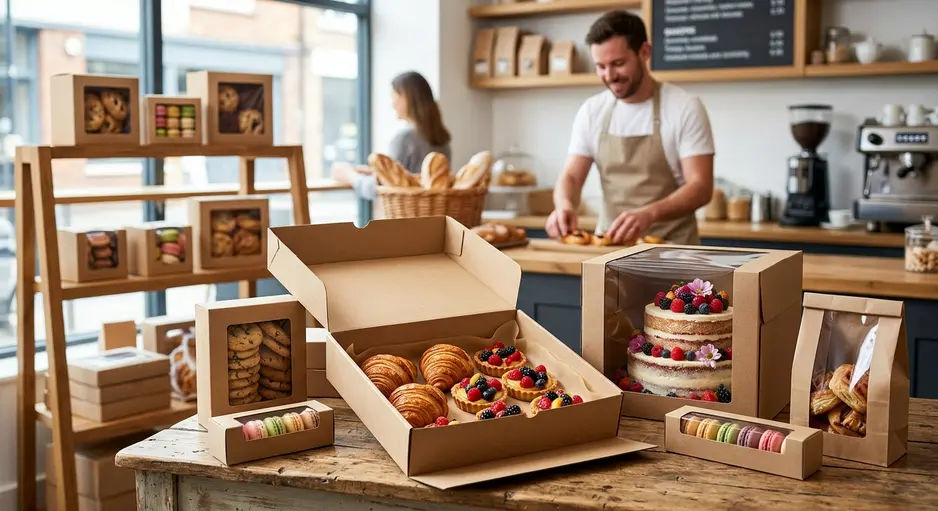
Questions to ask a manufacturer or exporter
- What are the GSM, caliper and stiffness tolerances?
- Is the board documented for direct or indirect food contact?
- Which coatings and printing processes are compatible?
- Is the reverse side grey, cream or white?
- Are sample sheets or trial quantities available?
- Can the supplier provide custom sizes and sheet formats?
- Which quality or sustainability certifications are supported?
- How is batch consistency tested?
- Can destination-market documents be supplied?
- What are the minimum order quantity and lead time?
Why sample testing matters
Print, die-cut, crease and glue the sample using the planned production process. Then pack the actual food and test storage, refrigeration, stacking and delivery. Check for grease marks, odour, cracked folds, bowing and adhesive failure.
Edicon Paper Product can be approached as a potential source when evaluating duplex and triplex paperboard. Before purchase, request current specifications, samples and supporting documents for the intended bakery application. Product suitability should be confirmed through technical review and practical trials.
Explore Duplex & Triplex Board for Product Packaging
Choose Board Based on Real Packaging Conditions
The right board for bakery product boxes depends on the food, contact conditions, carton design and delivery environment. Duplex board is a versatile and economical option for many standard cartons. Triplex board may suit premium presentation or specific structural needs.
Do not rely on the product name or GSM alone. Compare technical data, confirm food-contact documentation and run production trials with the finished pack. For project-specific guidance, request current specifications and samples from Edicon Paper Product before final approval.
Frequently Asked Questions
1. Is duplex board suitable for bakery boxes?
Yes, suitable grades can be used for many bakery cartons. The decision depends on product weight, grease level, box design and contact type. Direct-contact applications need relevant compliance evidence or a suitable liner, tray or barrier.
2. Is triplex board better than duplex board for cake boxes?
Not in every case. Triplex may offer a cleaner reverse or suit premium presentation. Actual strength depends on caliper, stiffness, fibre furnish and carton design. Compare technical data and test filled boxes before choosing.
3. What GSM board is used for cake packaging?
No single GSM fits every cake box. Cake weight, box width, board stiffness, base support and delivery conditions all matter. A structural trial is more reliable than selecting bakery packaging material by GSM alone.
4. Can recycled duplex board touch bakery products directly?
Direct contact should only occur when the grade has suitable compliance evidence for that food and market. Recycled board may require a functional barrier or separate food-safe inner pack.
5. Which board offers better printing quality?
Printing quality depends more on coating, surface smoothness, ink compatibility and press settings than on the duplex or triplex name. Request print samples and test the exact grade with the planned artwork.