Top Duplex Paper Board Supplier for Packaging in Canada
Choosing a duplex paper board supplier in Canada involves more than comparing prices. The board must print cleanly, run well through converting equipment, protect the packed product, and arrive within the required production schedule.
Duplex board is widely used for printed folding cartons and other non-corrugated packaging. Yet its performance can vary by construction, coating, moisture, thickness, and fibre mix. Buyers should compare measurable specifications and production samples before approving a bulk order.
This guide explains board types, printing performance, packaging uses, food-related concerns, and bulk sourcing. It also shows how Canadian buyers can evaluate Edicon Paper Product as a potential duplex paper board supplier for packaging.
What Is Duplex Paper Board?
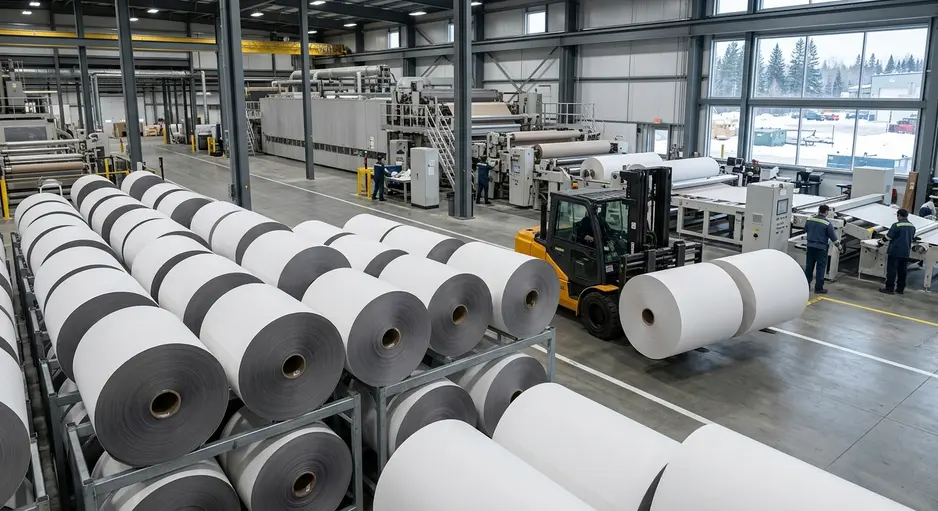
Duplex paper board is a multi-ply packaging paper board with a printable outer surface. One or more inner layers may contain recycled fibre. Its layered construction helps balance appearance, strength, converting performance, and cost.
The board is commonly considered for folding cartons, retail boxes, sleeves, and secondary packaging. Depending on supplier capabilities, it may be ordered in sheets or reels. The correct format depends on the printing press, die-cutting equipment, storage space, and production volume.
Grey Back Board vs. White Back Board
Grey back board has a grey reverse side. It is often selected for cartons where the inside is not a major part of the customer experience. Buyers may choose it when cost and outer print performance matter more than reverse-side appearance.
White back board has a lighter or white reverse surface. It may be more suitable when the inside of a carton remains visible or when a cleaner overall presentation supports the brand.
Neither option is automatically better. The decision should reflect the product, carton design, budget, branding, and expected customer experience.
How the Coated Surface Supports Printing
Coated duplex board has a smoother outer face that can improve ink holdout, colour reproduction, and fine-detail printing. A consistent coated surface is especially important for branded cartons with photographs, small text, barcodes, or solid areas of colour.
Visual whiteness alone does not prove print quality. Buyers should request production samples and conduct a press trial. The trial can reveal coating consistency, drying behaviour, ink demand, and offset printing compatibility.
GSM, Thickness, and Paperboard Stiffness
GSM describes the board’s weight in grams per square metre. Board thickness, also called caliper, measures its physical depth. The two values are related, but they are not interchangeable.
Paperboard stiffness also depends on fibre composition, moisture, grain direction, density, and multi-ply construction. A heavier board does not always deliver the best carton performance. Buyers should compare GSM range, board thickness, and stiffness data together.
Why Packaging Companies Choose Coated Duplex Board
Packaging companies often choose duplex board when they need an economical surface for strong graphics and dependable carton conversion. The final grade should match the product’s weight, box dimensions, filling method, and distribution conditions.
Folding Strength and Bursting Strength
Folding strength affects how well the board forms and closes without splitting. Bursting strength helps indicate its ability to resist pressure before rupturing. Both properties can influence performance during packing, stacking, handling, and transport.
No single GSM guarantees a set load capacity. Carton shape, score placement, closures, internal supports, and warehouse conditions can change the result. A finished-carton trial is more useful than relying on grammage alone.
Die Cutting, Scoring, and Creasing
Good die cutting performance helps produce clean edges and accurate carton shapes. Proper scoring and creasing allow panels to fold along the intended lines without surface cracking or unwanted bulging.
Converters should check grain direction, board moisture, tooling condition, score width, and score depth. Conditioning the board in the production environment before testing can also improve consistency.
This is an illustrative example. Each project requires testing with the actual artwork, carton structure, finishing process, and packed product.
How Do You Choose a Duplex Board Supplier?
Compare Technical Data, Not Just Price
A dependable duplex board supplier should be evaluated through clear, comparable specifications. Before requesting a quotation, prepare a technical checklist that covers the features affecting printing, converting, and carton performance.
- GSM and acceptable production tolerance
- Thickness or caliper
- Machine-direction and cross-direction stiffness
- Bursting strength
- Moisture level
- Cobb or water-absorption value, where relevant
- Surface smoothness, brightness, gloss, or whiteness
- Grey-back or white-back construction
- Recycled-fibre content when it is being claimed
Test methods should also be clear. Grammage and thickness results are more useful when the buyer and supplier follow agreed paper and board testing methods.
Request Samples and a Trial Order
Samples reduce the risk of approving a board based only on a data sheet. Ask whether samples represent standard production and whether the bulk shipment will follow the same agreed specification.
- Review the product data and available documentation.
- Condition the samples in the expected plant environment.
- Test the board on the intended printing press.
- Conduct die cutting, creasing, gluing, and folding trials.
- Run the carton on the actual filling or packing line.
- Approve a pilot order before moving to container volume.
Verify Batch Consistency
Ask the duplex board manufacturer how it controls variation between batches. Useful documents may include technical data sheets, batch test reports, lot identification, inspection records, and a written process for handling quality complaints.
Any certification, recycled-content statement, or chain-of-custody claim should be checked for validity, scope, facility, and applicable product grade. A company-level certificate may not cover every board supplied.
Assess Overseas Supply Reliability
A bulk duplex board exporter to Canada should provide clear commercial and shipping terms. Review manufacturing time, dispatch schedule, minimum order quantity, order-mix options, moisture protection, and loading methods.
Confirm whether the offer is FOB, CFR, CIF, or another Incoterm. Canadian buyers should also clarify customs documents, port routing, inland delivery responsibility, shipment insurance, and the procedure for reporting transit damage or quality concerns.
Which Packaging Applications Use Duplex Board?
Duplex Board for Folding Cartons in Canada
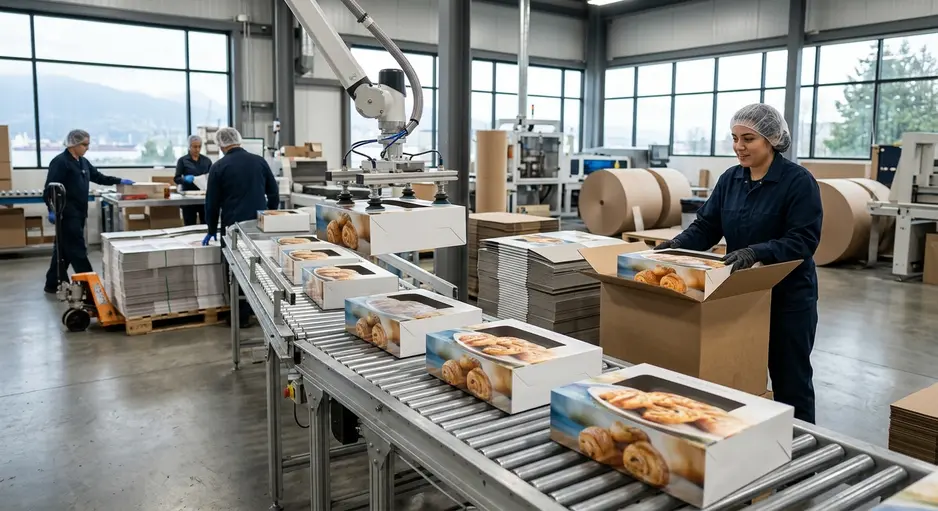
Common potential applications include personal-care cartons, cosmetic boxes, household-product packaging, garment boxes, consumer goods cartons, dry-product boxes, and promotional retail packaging.
Duplex board for folding cartons in Canada must be selected for the specific product and supply chain. Product weight, carton dimensions, stacking pressure, humidity, storage time, and finishing methods can all affect performance.
Board for Canadian Printing Companies
A duplex board supplier for printing companies in Canada should be evaluated for coating uniformity, ink holdout, print density, dimensional stability, registration, and drying behaviour.
Printers should also test planned finishing processes. These may include varnishing, lamination, foil stamping, embossing, window patching, gluing, and automated folding. Strong print quality is valuable only when the board also converts at a practical production speed.
Is Duplex Board Suitable for Food Packaging?
Not every recycled duplex board is suitable for direct food contact. Suitability can depend on fibre composition, coatings, barriers, inks, adhesives, food type, storage period, and expected temperature.
Direct-contact and secondary food packaging should be assessed separately. Canadian buyers considering duplex paper board for food packaging applications should review applicable Health Canada guidance and Canadian Food Inspection Agency responsibilities.
Ask for declarations, test data, migration evidence, or other documents relevant to the intended use. A compliant coating or inner liner does not automatically make the complete finished carton suitable for every food application.
Why Consider Edicon Paper Product?
Canadian importers, printers, and carton converters can include Edicon Paper Product in their supplier review. Since specifications and commercial terms can change, buyers should confirm all product and export details directly through the company’s official website.
Request verified information about available grades, coated surfaces, grey-back or white-back options, GSM, thickness, formats, minimum quantities, packaging methods, production schedules, and export documentation. Any certification or recycled-content claim should also be supported by current documentation.
Support for a Specification-Based Review
A useful supplier discussion begins with the application rather than a general request for “duplex board.” Explain the carton design, printing process, finishing steps, product weight, and expected distribution conditions.
Canadian buyers can then evaluate Edicon based on samples, technical specifications, communication, commercial terms, and documented quality controls. This approach is more reliable than choosing a duplex board manufacturer for the packaging industry on price alone.
Request a Detailed Quotation
Share the required board type, GSM, dimensions, quantity, application, Canadian destination, delivery schedule, and preferred Incoterm. Visit Edicon Paper Product to request current product and ordering information.
How to Order Bulk Duplex Board for Canada
Information to Include in an RFQ
- Grey back or white back
- Coated or uncoated surface
- Required GSM and tolerance
- Thickness or caliper target
- Sheet dimensions or reel width
- Grain direction
- Printing and finishing processes
- End-use application
- Order quantity and forecast volume
- Destination port or warehouse
- Preferred Incoterm and delivery date
- Testing and documentation requirements
Calculate Total Landed Cost
The lowest unit price may not produce the lowest finished-carton cost. Account for freight, insurance, brokerage, applicable duties or taxes, inland transport, warehousing, and currency changes.
Also consider production waste. Inconsistent board can lead to press stoppages, colour variation, damaged folds, rejected cartons, and missed delivery dates. These costs can exceed a small saving in the initial board price.
Approve Performance Before Scaling
Use a staged process: review documents, test samples, complete printing and converting trials, place a pilot order, assess performance, and then negotiate a bulk supply agreement. Record approved tolerances so future shipments can be measured against the same requirements.
Top Duplex Paper Board Supplier in Canada
Choose a Supplier Through Testing and Clear Specifications
The right duplex paper board supplier in Canada should offer more than an attractive quote. Board consistency, coated-surface quality, stiffness, folding performance, documentation, and reliable delivery all affect the true cost of carton packaging production.
Define the application, compare technical data, test representative samples, and complete a pilot order before scaling. Buyers evaluating Edicon Paper Product can use this process to request an accurate quotation and determine whether the available board meets their printing, converting, compliance, and supply needs.
Frequently Asked Questions About Duplex Board
1. What GSM duplex board is best for folding cartons?
There is no universal best GSM. The choice depends on carton dimensions, product weight, stiffness, finishing, and distribution conditions. Create a prototype and test the finished carton before approving production.
2. What is the difference between grey-back and white-back board?
Grey-back board has a grey reverse and is often used for economical cartons. White-back board offers a cleaner inner appearance. Branding, visibility, print needs, stiffness, and budget should guide the choice.
3. Is coated duplex board compatible with offset printing?
It is commonly considered for offset printing. Actual results depend on coating consistency, ink, moisture, press settings, and drying conditions. Test varnish, lamination, foil, and other finishes during the press trial.
4. Can recycled duplex board be used for food packaging?
Recycled content does not confirm food-contact suitability. Direct-contact use requires an application-specific safety review. Depending on the food and carton design, a suitable barrier or separate inner package may be required.
5. How can cracking during creasing be reduced?
Check moisture, grain direction, tooling, score width, score depth, coating flexibility, and plant humidity. Condition the board and approve crease settings before starting a full production run.