Kraft vs Ivory Board: Strength, Finish & Cost Comparison
Packaging is no longer just about protecting a product it has become a core part of branding, user experience, sustainability, and customer perception. Whether a brand sells cosmetics, electronics, food items, luxury goods, or everyday consumer products, the type of packaging board used dramatically affects the final outcome. The two most widely chosen options today are kraft board and ivory board, each offering distinct advantages in strength, finish, print quality, and cost.
As packaging expectations grow, businesses must carefully evaluate which material aligns with their goals. This detailed comparison explores kraft and ivory boards from every angle, helping you choose confidently and strategically based on strength, aesthetics, pricing, sustainability, and usage applications.
What Is Kraft Board?
Kraft board is a highly durable and naturally textured paperboard made using the kraft pulping process. It is typically available in two popular variants: brown kraft board and white kraft board, allowing brands to choose between an earthy, rustic look or a cleaner, more refined appearance. The long softwood fibers in kraft board give it exceptional tear resistance and flexibility, making it suitable for heavy-duty and eco-friendly packaging needs.
The natural brown tone of kraft board has become a trend in modern, environmentally conscious branding. Many brands in organic beauty, handmade products, natural foods, and sustainable goods prefer kraft material because it visually communicates an eco-driven identity. Despite its simple look, kraft board is incredibly strong and performs well across different temperature and moisture conditions.
What Is Ivory Board?
Ivory board is a smooth, premium white paperboard made using chemical pulping and layering techniques. Unlike kraft's natural appearance, ivory board is processed to achieve a spotless white, glossy, or matte-smooth surface that delivers excellent printing results. It is also known in printing industries as ivory board paper, a material trusted for luxury packaging and detailed Brand visuals.
This board is stiff, refined, and elegant, which makes it highly popular in retail packaging, cosmetics, smartphone accessories, stationery, and high-value product segments. Its surface supports sharp colors, gradients, metallic finishes, embossing, and UV effects adding a premium feel to the packaging. Ivory board is often the go-to choice when visual perfection and branding aesthetics are the top priority.
Kraft Board vs Ivory Board: What’s the Difference?
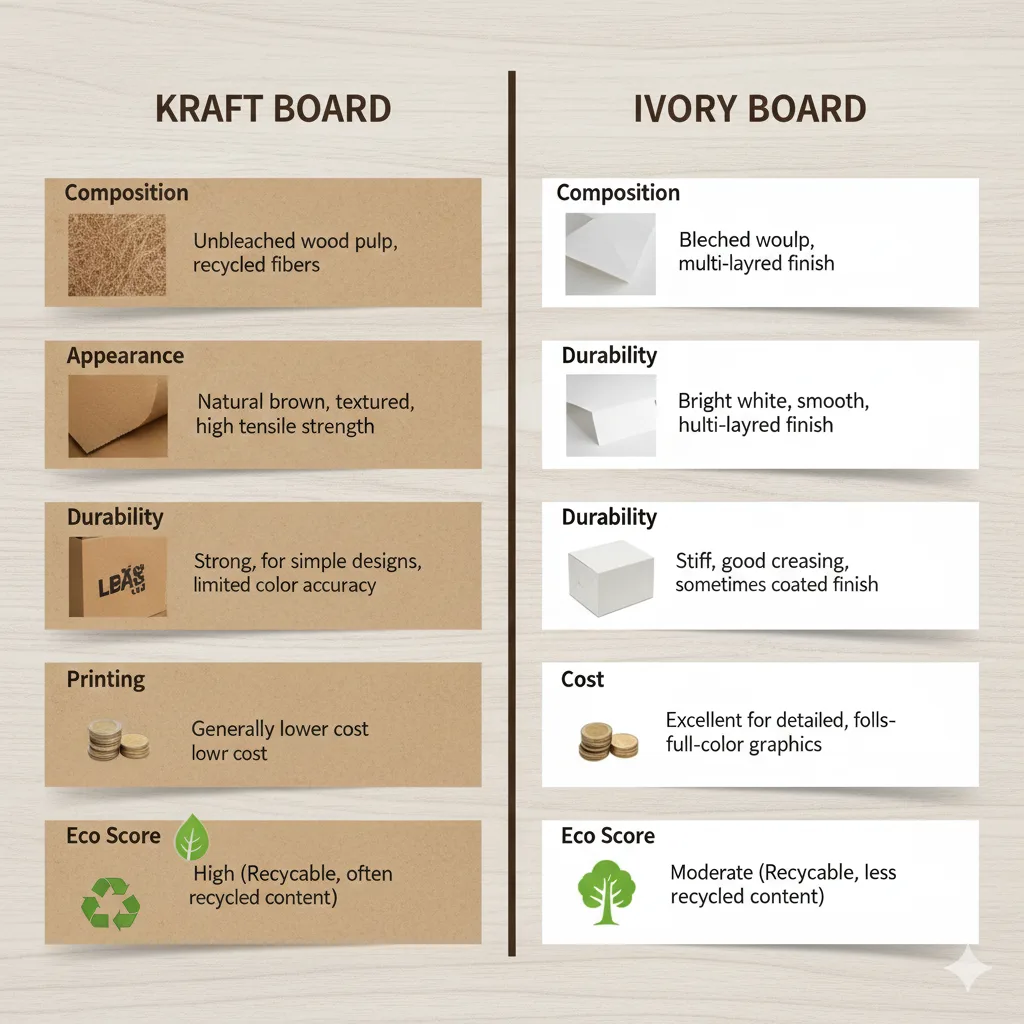
Although both kraft board and ivory board are paper-based materials, their differences are significant and influence where they are best used.
• Composition: Kraft uses minimally bleached fibers; ivory uses chemically treated, layered pulp.
• Appearance: Kraft has a raw, natural texture; ivory has a bright, smooth finish.
• Durability: Kraft is generally stronger and more resistant to tearing.
• Printing: Ivory provides superior printing and finishing options.
• Cost: Kraft is budget-friendly; ivory is slightly premium.
• Eco Score: Kraft is highly eco-friendly; ivory offers moderate sustainability.
Because their properties differ, brands can choose either depending on whether they prioritize strength, luxury appeal, eco-values, or print performance.
| Feature | Kraft Board | Ivory Board |
|---|---|---|
| Strength | Very High | Moderate–High |
| Surface Finish | Natural, rustic | Smooth, premium |
| Printing | Moderate | Excellent |
| Cost | Lower | Higher |
| Eco-Friendly | Highly | Moderate |
| Best For | Heavy, eco packaging | Luxury, premium boxes |
Strength Comparison: Which One Is Stronger?
When durability is a core requirement, kraft board takes the lead. Its long fibers and minimal chemical processing allow the material to maintain a natural toughness. This makes kraft incredibly resistant to pressure, pulling, folding, and tearing.
Why Kraft Board Is Stronger
• Its fiber structure remains intact due to low chemical intervention.
• It has high burst strength and load-bearing performance.
• The material flexes without cracking, making it ideal for shipping.
• It handles moisture changes better than many white paperboards.
Ivory board, on the other hand, offers good stiffness and rigidity but is more suitable for lighter items. It provides decent structural support but cannot match the rugged durability of kraft. This makes ivory more suited for presentation-oriented packaging rather than protection-oriented packaging.
Real-World Strength Examples
• Kraft boxes survive long-distance courier shipping.
• Brown kraft board is often used for grocery delivery.
• White kraft board supports food trays and heavy soaps.
• Ivory board is commonly found in perfume boxes, electronics sleeves, and cosmetics, where weight is usually moderate.
Finish Comparison: Which One Looks Better?
Finish plays a major role in packaging appeal, and here ivory board stands out as the premium option. Its smooth, flawless white surface enhances print details and accentuates color vibrancy.
Advantages of Ivory Board Finish
• Perfect for CMYK and high-resolution prints
• Compatible with luxury finishes like foiling, embossing, debossing, and spot UV
• Gives a clean, elegant, and polished look
• Ideal for branding where visual quality matters
Kraft board, in contrast, offers a natural matte texture. This is excellent for brands that want to communicate sustainability and authenticity. However, kraft’s surface fibers may slightly distort fine print details, and its brown tone can alter certain colors.
Which One Suits What?
• Kraft finish: rustic, minimalistic, natural, eco-friendly branding
• Ivory finish: premium, refined, luxurious product presentation
Cost Comparison: Which One Is More Affordable?
Cost varies depending on thickness, GSM, finish, brand requirements, and order quantity. However, kraft board typically remains more affordable due to its simpler manufacturing process.
Why Kraft Costs Less
• Minimal bleaching or surface treatments
• Uses natural fibers without heavy chemical processing
• Requires fewer production steps
Ivory board costs more because of the multi-step chemical treatment, whitening, and finishing processes that give the board its premium smoothness.
Usage Based on Cost
• Kraft board is ideal for bulk mailer boxes, shipping cartons, eco-friendly boxes, and everyday retail packaging.
• Ivory board is suitable for premium product boxes, marketing materials, cosmetic packaging, and luxury retail items.
Which Material Is More Eco-Friendly?
Sustainability is a growing priority for both businesses and consumers. Kraft board excels in this category due to its natural fiber composition, biodegradability, and low chemical usage.
Eco Advantages of Kraft Board
• Biodegradable and compostable
• Often made from recycled materials
• Minimal water and energy consumption
• Lower carbon footprint
Ivory board is recyclable as well, but the additional whitening and coating processes can reduce its eco-score. Even then, many brands choose ivory board paper because it balances recyclability with premium aesthetics.
Which Board Is Better for High-Quality Printing?
Printing quality is one of the biggest deciding factors for brands and overall, ivory board performs better due to its smooth, glossy, or matte finish.
Ivory Board Supports
• Digital printing
• Offset printing
• Metallic foiling
• Embossing & debossing
• Spot UV gloss
• High-saturation color printing
Kraft board supports printing well, but due to its rough texture, highly detailed or gradient-based designs may not appear as vibrant.
When to Choose Which?
• Choose kraft for logo prints, minimal designs, and earthy aesthetics.
• Choose ivory for detailed artwork, premium packaging, and luxury visuals.
Applications: Where to Use Kraft Board vs Ivory Board
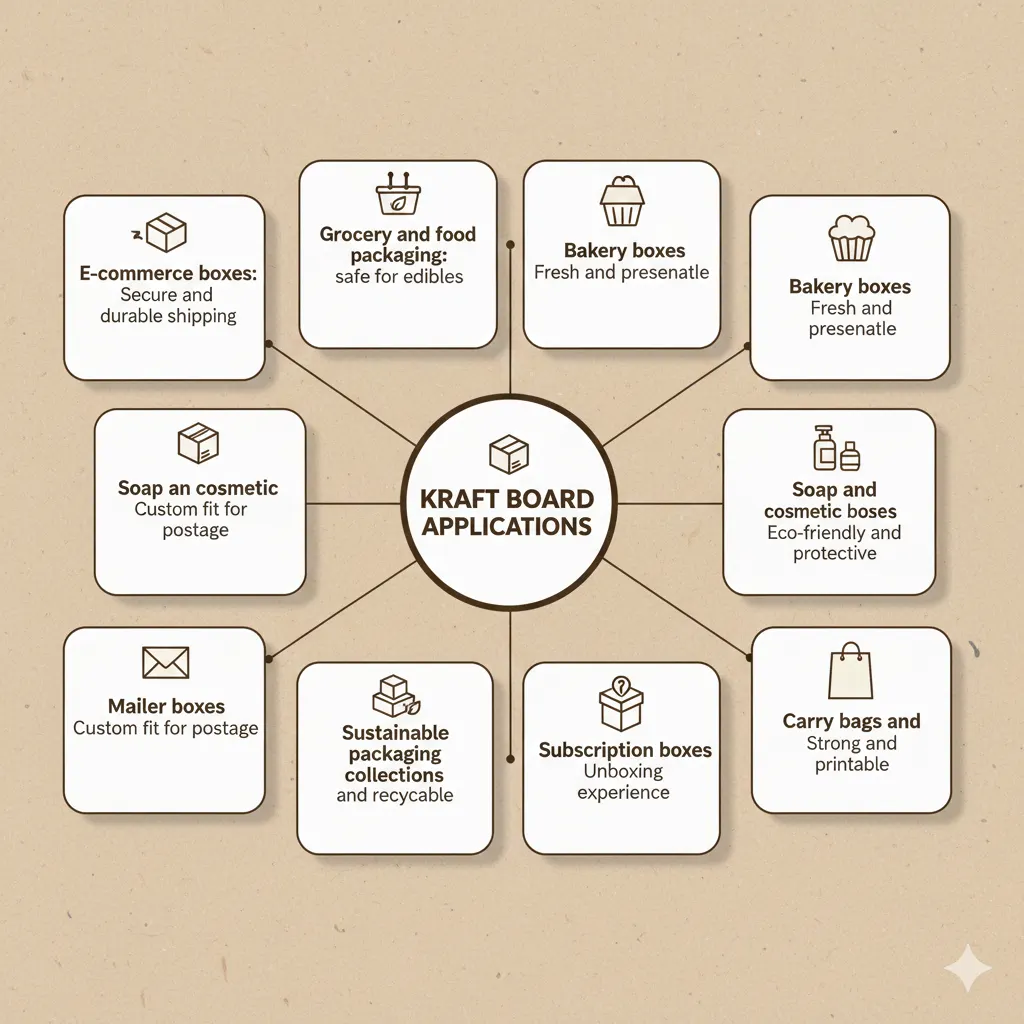
Kraft Board Applications
Kraft board is preferred for sturdy, reliable, and natural packaging such as:
• E-commerce boxes
• Grocery and food packaging
• Bakery boxes
• Soap and cosmetic base boxes
• Mailer boxes
• Sustainable packaging collections
• Subscription boxes
• Carry bags and sleeves
Ivory Board Applications
Ivory board is widely used by premium and design-focused brands:
• Cosmetic packaging
• Perfume and skincare boxes
• Smartphone accessory sleeves
• Premium stationery
• Pharma boxes
• Gift boxes
• Marketing cards and brochures
• Luxury confectionery packaging
Both boards serve distinct purposes, and many brands even use both materials across different product categories.
How to Choose Between Kraft Board & Ivory Board
To make the right choice, consider the checklist below:
• Strength & durability needs: Choose kraft for heavy products; ivory for lightweight items.
• Printing detail required: Ivory is best for vibrant prints; kraft suits minimal designs.
• Brand image: Kraft for natural and sustainable aesthetics; ivory for luxury and elegance.
• Budget: Kraft is cost-effective; ivory is premium-priced.
• Eco expectations: Kraft is greener; ivory offers moderate sustainability.
• Product type: Always consider weight, fragility, and target customer expectations.
Conclusion
Both kraft board and ivory board offer impressive advantages, but their roles differ based on your packaging goals. Kraft board provides exceptional strength, durability, and eco-friendliness, making it a dependable choice for shipping, everyday packaging, and sustainable branding. Ivory board, with its refined surface and printing excellence, is perfect for premium products that need a polished, high-end appearance.
When selecting between the two, consider your product type, brand identity, budget, and printing needs. Each material has its own strengths, and choosing the right one ensures your packaging not only protects the product but also enhances your brand value and customer experience.
FAQs
1. Which is stronger kraft board or ivory board?
Kraft board is stronger because of its long natural fibers and higher tear resistance. Ivory board is durable but best for lightweight or premium packaging.
2. Is ivory board better for printing than kraft board?
Yes. Ivory board gives sharper, high-quality printing and premium finishes. Kraft board supports basic printing but not fine detailing.
3. Which material is more eco-friendly: kraft board or ivory board?
Kraft board is more eco-friendly as it’s biodegradable and minimally processed. Ivory board is recyclable but has extra chemical treatment.
4. What type of products are best packed using kraft board?
Kraft board works best for e-commerce boxes, grocery packs, food trays, soaps, bakery items, and eco-friendly packaging needing high strength.
5. When should I choose ivory board over kraft board?
Choose ivory board for premium packaging, luxury printing, cosmetic boxes, perfume boxes, electronics sleeves, and invitation cards.