Low GSM vs High GSM: Which Should You Choose for Packaging?
Introduction
Packaging plays a vital role in protecting products, controlling costs, and creating a positive customer experience. One of the most important factors in packaging material selection is GSM, which directly affects paper strength, thickness, and usability. Understanding Low GSM vs High GSM packaging helps businesses choose materials that suit both product needs and budget constraints.
The right GSM ensures packaging performs well during handling, storage, and transportation. While low GSM packaging offers flexibility and cost efficiency, high GSM packaging provides strength and a premium feel. Knowing how GSM impacts performance allows manufacturers and businesses to make informed decisions, reduce material waste, and improve overall packaging efficiency.
What Is GSM in Packaging?
GSM stands for grams per square meter and is the standard measurement used to determine the weight of paper or packaging material. In simple terms, GSM in packaging indicates how heavy or thick a sheet of paper is. A higher GSM means heavier and thicker material, while a lower GSM refers to lighter and thinner paper.
Understanding what is GSM in packaging helps businesses evaluate strength, durability, and suitability for different packaging applications. GSM affects how well packaging protects products, how it feels to the customer, and how it performs during handling and transportation. Selecting the right GSM ensures the packaging meets functional needs without adding unnecessary cost or material weight.
Understanding Paper GSM for Packaging
Paper GSM plays a key role in determining how packaging performs in real-world use. Different GSM levels affect the strength, flexibility, and protective ability of packaging materials. Lighter GSM papers are easier to fold and handle, while higher GSM papers offer better rigidity and resistance to damage.
A clear packaging material GSM guide helps businesses match paper weight with product requirements. Factors such as product weight, handling conditions, and transportation needs influence the ideal GSM choice. Understanding paper GSM for packaging allows manufacturers to optimize material usage, reduce costs, and ensure reliable packaging performance.
What Is High GSM Packaging Material?
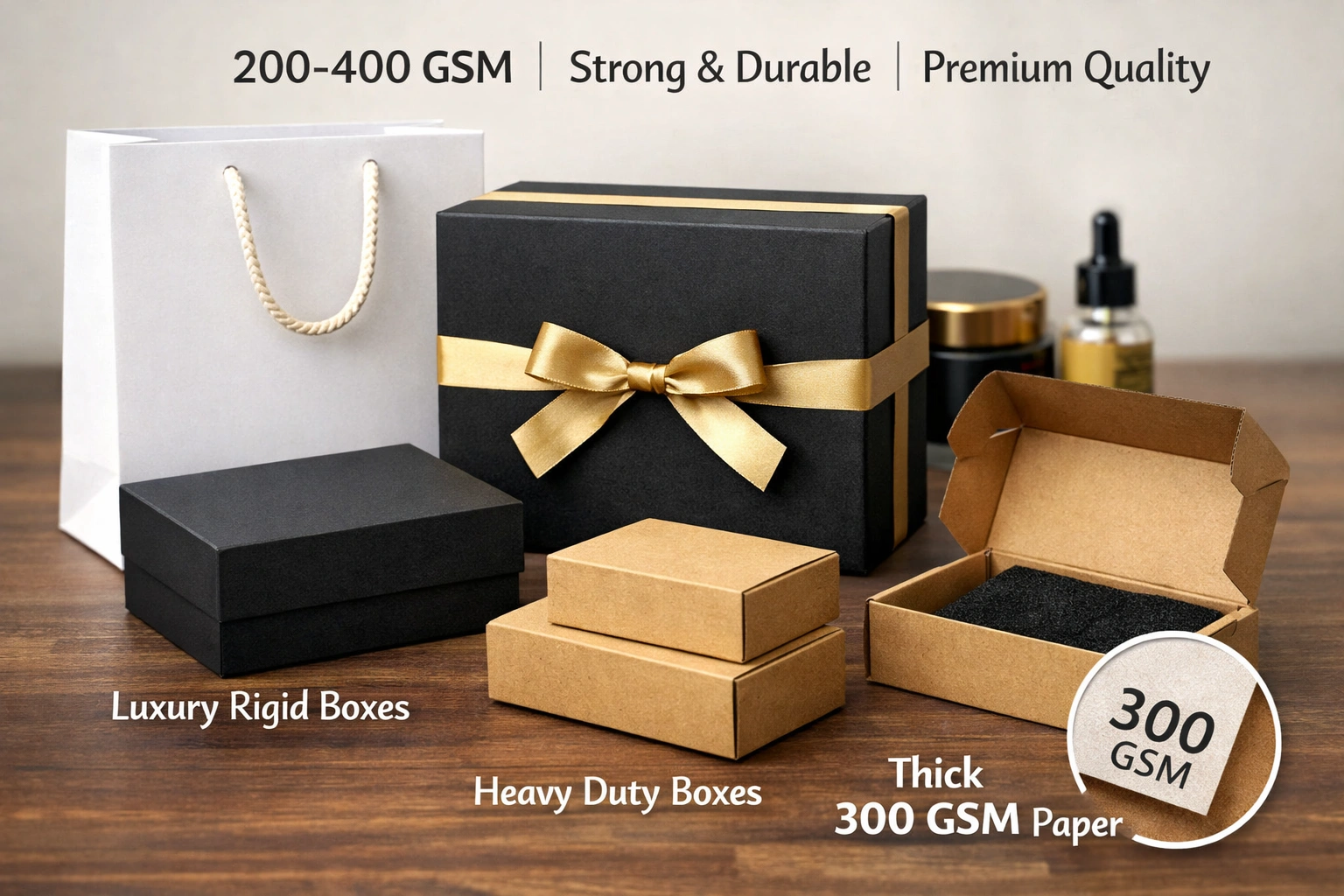
High GSM packaging material is thicker and heavier paper, typically ranging from 200 to 400 GSM or more, offering superior strength and durability. It is ideal for premium packaging, heavy products, and situations requiring extra protection.
Characteristics of High GSM Paper
-
Thick, rigid, and sturdy
-
Durable and resistant to tearing
-
Provides a premium look and feel
-
Supports high-quality printing
Common High GSM Paper Uses
-
Luxury product boxes and gift packaging
-
E-commerce and heavy-duty shipping boxes
-
Presentation folders and marketing materials
-
Packaging for fragile or valuable items
Benefits of Using High GSM Packaging Material
-
Strong protection for products during shipping
-
Premium tactile and visual appeal
-
Ideal for branding and professional presentation
Limitations and Ideal Applications
-
Heavier and more expensive than low GSM paper
-
May increase shipping costs
-
Best suited for valuable, heavy, or fragile products where durability and premium presentation matter
What Is Low GSM Packaging Material?
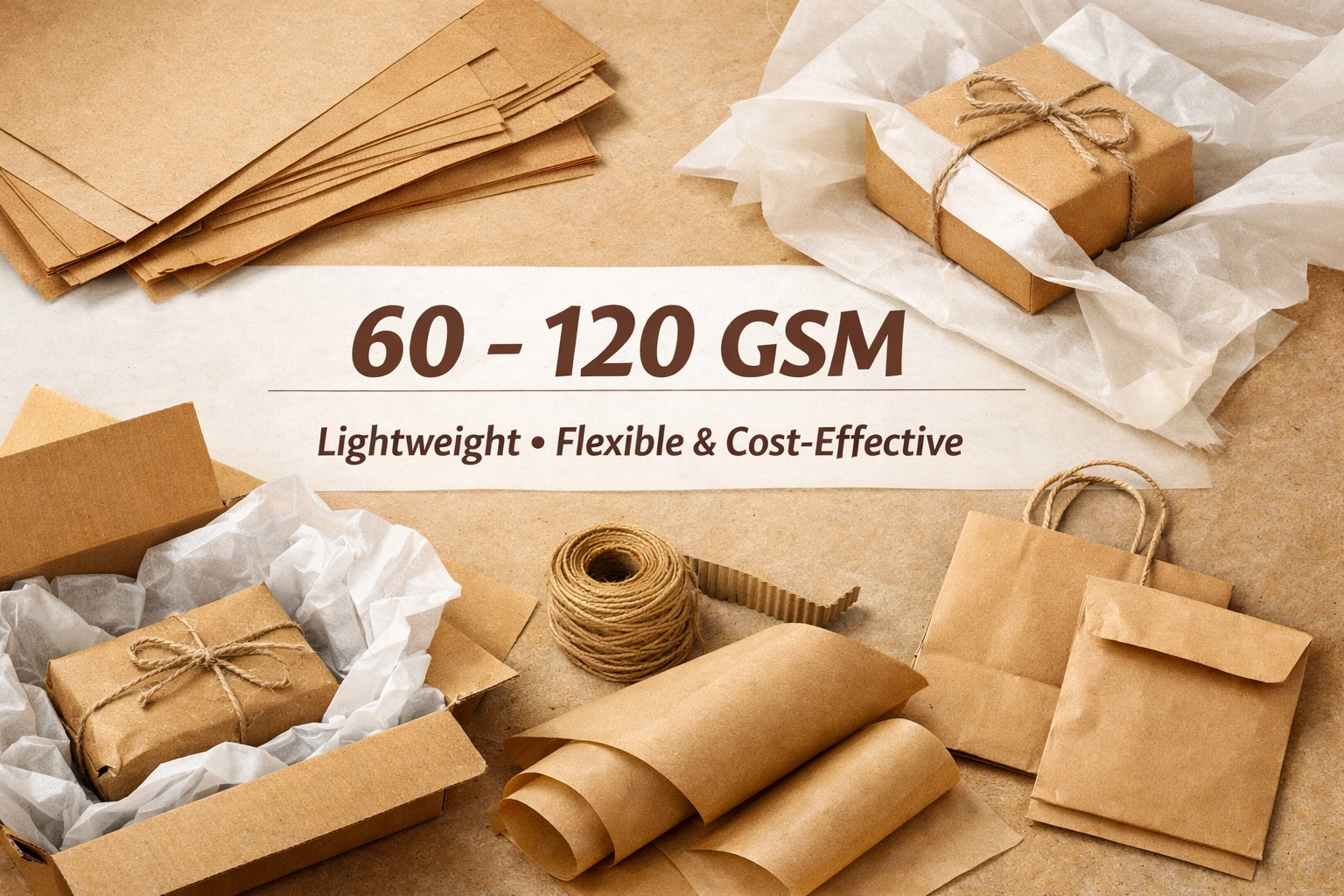
Low GSM packaging material is lightweight paper, generally ranging from 60 to 120 GSM. It is thinner, flexible, and easier to handle than higher GSM paper, making it ideal for cost-effective packaging solutions.
Characteristics of Low GSM Paper
-
Lightweight and flexible
-
Economical and easy to produce
-
Suitable for wrapping and light-duty packaging
-
Easier to fold and shape
Common Low GSM Paper Uses
-
Retail bags and gift wraps
-
Flyers and promotional materials
-
Protective inserts for products
-
Secondary packaging for light items
Benefits of Using Low GSM Packaging Material
-
Reduces shipping costs due to lighter weight
-
Eco-friendly by using less material
-
Easy to print and customize
Limitations and Ideal Applications
-
Less durable and not suitable for heavy products
-
Not ideal for items needing strong protection
-
Best for lightweight goods, retail packaging, and short-distance shipping
Low GSM vs High GSM Packaging: Key Differences
|
Comparison Factor |
Low GSM Packaging |
High GSM Packaging |
|
Weight & Thickness |
Lightweight and thin |
Thick and heavy |
|
Strength & Durability |
Suitable for light products |
Strong and durable |
|
Flexibility |
Highly flexible and easy to fold |
Rigid and firm |
|
Cost |
Cost-effective and budget-friendly |
Higher cost due to material weight |
|
Shipping Impact |
Reduces shipping weight and cost |
Increases shipping cost |
|
Print Quality |
Basic print quality |
High-quality and premium finish |
|
Protection Level |
Limited protection |
Excellent protection |
|
Sustainability |
Uses less material |
Uses more material |
|
Best Use Cases |
Wrapping, inserts, light packaging |
Boxes, premium and heavy packaging |
Low GSM Paper vs High GSM Paper: Which Performs Better?
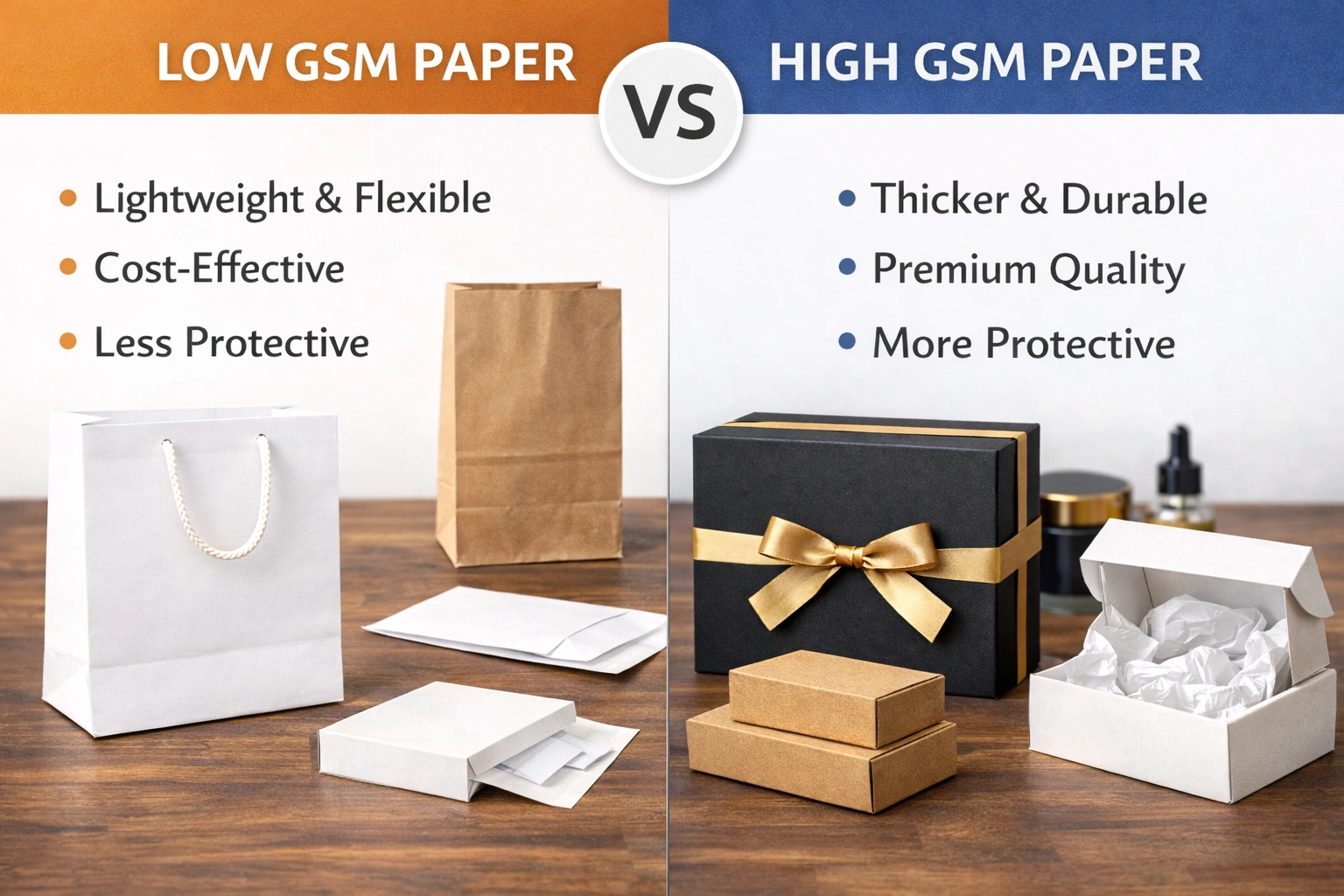
The performance of packaging paper is not defined by GSM alone but by how well the material matches the intended use. Low GSM vs High GSM packaging is a comparison of functionality rather than quality. Both options are designed to perform efficiently in different scenarios, and choosing the right one depends on product type, handling conditions, and packaging goals.
Instead of asking which GSM is better overall, businesses should focus on which GSM performs better for their specific packaging requirement.
Performance Based on Packaging Needs
Low GSM paper performs better in applications where the product is lightweight and does not require heavy protection. It is commonly used for inner wrapping, secondary packaging, and disposable packaging layers. Its flexibility allows easy folding and fast packing, making it suitable for high-speed and high-volume operations.
High GSM paper performs better when packaging needs strength, rigidity, and shape retention. It is ideal for products that are heavy, fragile, or premium in nature. High GSM packaging supports structured designs such as cartons and rigid boxes that must hold their form during handling.
Impact on Product Protection
Low GSM paper offers basic protection against dust, minor friction, and surface contact. It works well when products face minimal handling risk or are already supported by outer packaging. For items with low breakage risk, low GSM paper provides sufficient protection without unnecessary material use.
High GSM paper delivers stronger protection by resisting tearing, crushing, and external pressure. It is better suited for products exposed to frequent handling, stacking, or long transit routes. This makes high GSM paper a reliable choice for export packaging and fragile goods.
Storage and Transportation Considerations
From a logistics perspective, low GSM paper reduces storage space and overall shipment weight. This leads to lower transportation costs and easier inventory management, especially for bulk packaging requirements. It is commonly preferred where efficiency and cost control are priorities.
High GSM paper occupies more space and adds weight, which can increase storage and freight costs. However, it provides better structural stability during stacking and long-distance transport. In many cases, the added cost is justified by reduced product damage and returns.
Choosing Based on Usage, Not Assumptions
A common misconception is that higher GSM automatically means better packaging. In reality, using unnecessarily high GSM can increase costs without improving performance. Similarly, choosing low GSM where strength is required can lead to packaging failure.
The right decision comes from understanding product weight, handling conditions, storage duration, and customer expectations. A clear understanding of Low GSM vs High GSM packaging allows businesses to select materials based on real performance needs rather than assumptions.
How to Choose the Right GSM for Packaging?
Choosing the correct GSM is a practical decision that directly affects packaging performance, cost, and product safety. Instead of selecting paper based on thickness alone, businesses should evaluate how the packaging will be used across the supply chain. Understanding GSM in packaging helps avoid over-packaging or under-protection.
In real packaging operations, GSM selection should be driven by product requirements, handling conditions, and logistics demands rather than assumptions. Packaging suppliers like Edicon Paper often recommend GSM selection based on product weight, logistics conditions, and end-use performance rather than thickness alone.
Below is a clear, step-by-step approach to choosing the right GSM for packaging.
Factors to Consider Before Selecting GSM
Before finalizing GSM, it is important to assess functional requirements rather than visual preference. GSM selection should be based on product characteristics, handling frequency, and packaging purpose. Ignoring these factors often leads to inefficient packaging choices.
A reliable packaging material GSM guide always starts with real usage analysis.
Product Weight and Fragility
Product weight plays a major role in GSM selection. Lightweight and non-fragile products generally require low GSM paper, while heavier or delicate items need higher GSM for added strength.
Fragile products that can bend, crack, or deform during handling benefit from high GSM packaging that offers rigidity and protection.
Packaging Type: Wrapping, Boxes, Bags, or Sheets
The type of packaging directly influences GSM requirements. Wrapping papers and inner liners usually perform well with low GSM paper due to flexibility. Bags and cartons require medium to high GSM to maintain shape and support weight.
Rigid boxes, premium cartons, and load-bearing packaging demand high GSM paper for structural stability.
Storage and Shipping Conditions
Storage duration and transportation distance significantly impact GSM choice. Short-term storage and local delivery often work well with lower GSM packaging. Long-distance shipping, stacking, or export conditions require higher GSM for better resistance to pressure and handling damage.
Environmental factors such as moisture exposure or rough transit should also be considered.
Choosing GSM for Packaging: Step-by-Step
-
Step 1: Identify product weight and fragility
-
Step 2: Decide the packaging type (wrap, bag, carton, box)
-
Step 3: Evaluate handling, stacking, and shipping conditions
-
Step 4: Balance cost against required protection
-
Step 5: Test GSM performance before large-scale use
Following this step-by-step method makes choosing GSM for packaging practical, cost-effective, and performance-driven rather than guesswork.
Industry-Wise GSM Selection Guide
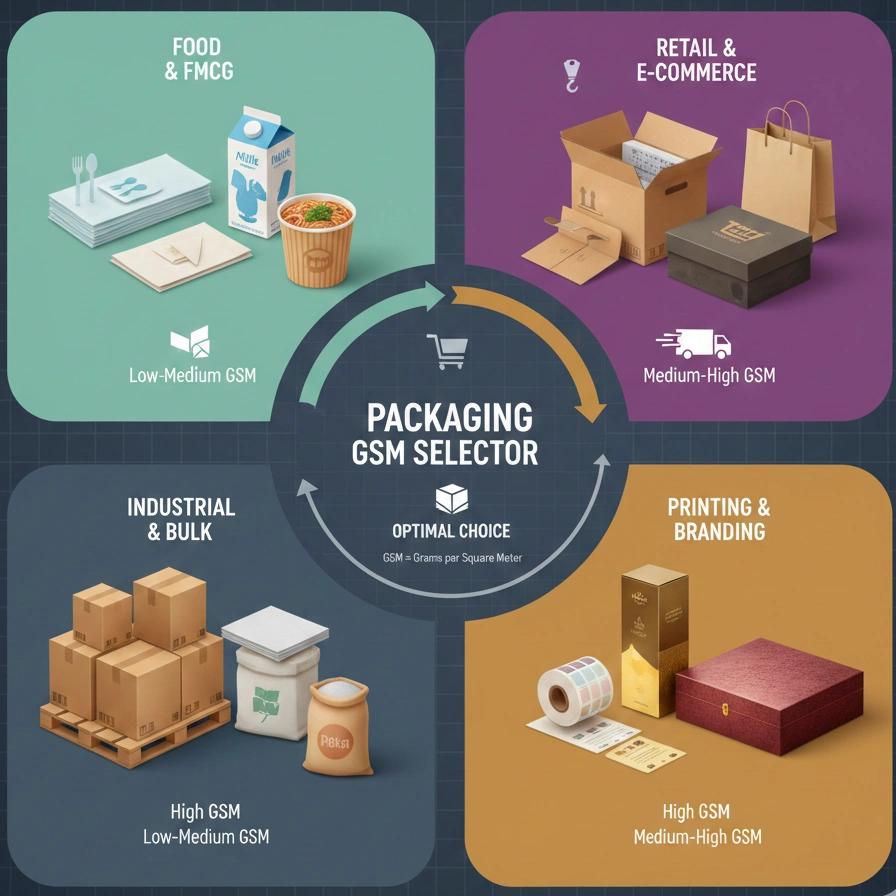
Choosing the right GSM becomes easier when packaging needs are evaluated industry by industry. Different sectors prioritize protection, presentation, or cost efficiency differently. A structured packaging material GSM guide helps businesses select GSM based on real operational requirements rather than general assumptions.
Food and FMCG Packaging
Food and FMCG packaging usually focuses on hygiene, flexibility, and high-volume usage. Low to medium GSM paper is commonly used for wrapping, inner liners, and disposable food packaging. These materials are lightweight, easy to handle, and cost-effective for fast-moving consumer goods.
For items requiring more protection, such as boxed food products or takeaway cartons, slightly higher GSM paper is preferred to maintain shape and prevent leakage or damage during handling.
Retail and E-Commerce Packaging
Retail and e-commerce packaging requires a balance between protection and presentation. Medium to high GSM paper is often used for boxes, mailers, and branded packaging. These materials provide sufficient strength to protect products during shipping while supporting good print quality for branding.
E-commerce packaging exposed to multiple handling stages benefits from higher GSM paper to reduce the risk of tearing or crushing.
Industrial and Bulk Packaging
Industrial and bulk packaging demands strength and load-bearing capacity. High GSM paper is commonly used for cartons, sheets, and protective layers in bulk shipments. These applications involve stacking, long-distance transportation, and heavier products.
Using higher GSM paper helps maintain structural integrity and reduces damage during storage and transit.
Printing and Branding Applications
For printing and branding, GSM selection affects both appearance and durability. Medium to high GSM paper is preferred for printed packaging, labels, and premium product boxes. Higher GSM enhances print clarity, color consistency, and overall feel.
Luxury packaging and marketing materials often use high GSM paper to create a premium visual and tactile experience.
Using a Packaging Material GSM Guide
A reliable packaging material GSM guide considers industry requirements, product type, handling conditions, and cost factors together. Referring to such a guide helps businesses standardize GSM selection, improve packaging performance, and maintain consistency across applications.
Conclusion
Choosing between low GSM and high GSM packaging ultimately depends on your product’s weight, protection needs, and brand goals. Low GSM packaging material is ideal for lightweight items, inner wrapping, and cost-efficient solutions, while high GSM packaging material provides better strength, durability, and a premium look for heavier or fragile products.
Understanding GSM in packaging allows businesses to make informed decisions that balance cost, performance, and presentation. Instead of assuming thicker paper is always better, selecting the right paper GSM for packaging ensures smoother storage, safer transportation, and reliable product protection. With quality paper solutions from Edicon Paper, businesses can confidently choose the most suitable GSM to meet their packaging requirements while maintaining consistency, efficiency, and brand value.
Frequently Asked Questions (FAQs)
1. What is the best GSM for packaging?
There is no single best GSM for packaging. The ideal GSM depends on product weight, fragility, and packaging type. Lightweight items often use low GSM paper, while heavier products require higher GSM for added strength.
2. Is low GSM packaging strong enough?
Yes, low GSM packaging is strong enough for light products, inner wrapping, and short-distance handling. It works best where flexibility and cost efficiency are more important than heavy protection.
3. When should high GSM packaging be used?
High GSM packaging should be used for heavy, fragile, or premium products. It provides better durability, structure, and protection during storage and transportation.
4. Does GSM affect print quality?
Yes, GSM directly impacts print quality. Higher GSM paper offers better ink absorption, sharper prints, and a premium finish, making it ideal for branded and retail packaging.
5. How does GSM impact packaging cost?
GSM affects both material and shipping costs. Low GSM paper is more economical and lightweight, while high GSM paper costs more but offers better protection and durability.