Paper GSM vs Paper Thickness: Key Difference
Introduction
When selecting paper for printing, packaging, or branding, two terms are commonly used paper GSM and paper thickness. While both relate to how a paper feels and performs, they measure very different properties. This confusion often leads buyers to choose paper that looks right but does not perform as expected.
Understanding Paper GSM vs Paper Thickness is essential for making the right paper selection. GSM measures paper weight, while thickness refers to how thick the sheet actually is. Two papers can have the same GSM but different thickness due to paper structure and density. Knowing this difference helps businesses choose paper that delivers the right balance of strength, print quality, and usability for their specific application.
What Is GSM in Paper?
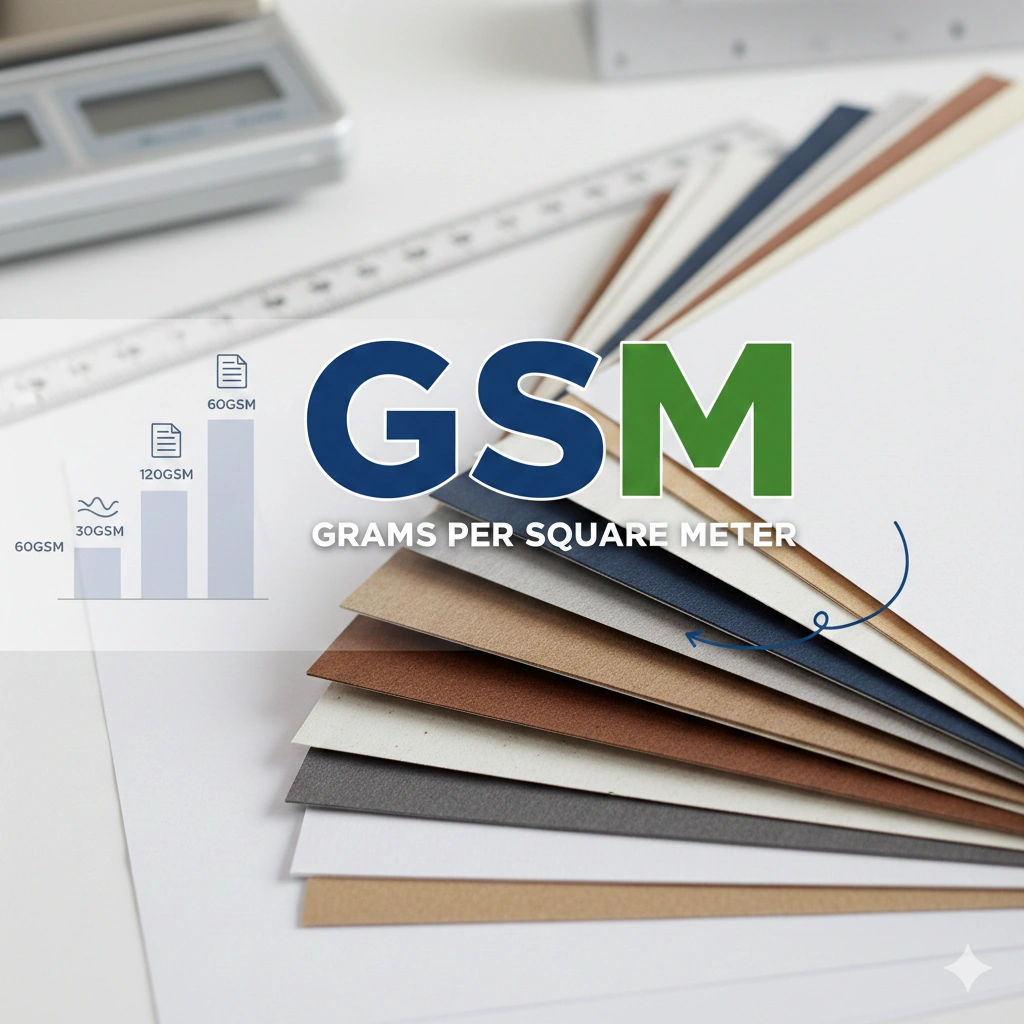
GSM stands for grams per square meter and is the standard unit used to measure paper GSM. It indicates the weight of a paper sheet based on its area, not its thickness. Simply put, GSM tells you how heavy the paper is, not how thick it looks or feels.
Understanding what is GSM in paper helps buyers compare paper weight consistently across different sizes and formats. Higher GSM papers are heavier and usually feel more solid, while lower GSM papers are lighter and more flexible. GSM plays an important role in determining paper strength, durability, and suitability for printing or packaging applications.
What is GSM in paper used for?
GSM plays a crucial role in determining how paper performs during printing and handling. with lower GSM Papers are easier to fold and are commonly used for everyday printing. Higher GSM papers feel sturdier and are preferred for premium printing applications.
Here is how paper GSM typically aligns with common uses:
-
60–80 GSM: Office documents, notebooks, newspapers
-
100–170 GSM: Flyers, brochures, magazines
-
200–300 GSM: Business cards, covers, postcards
What Is Paper Thickness?
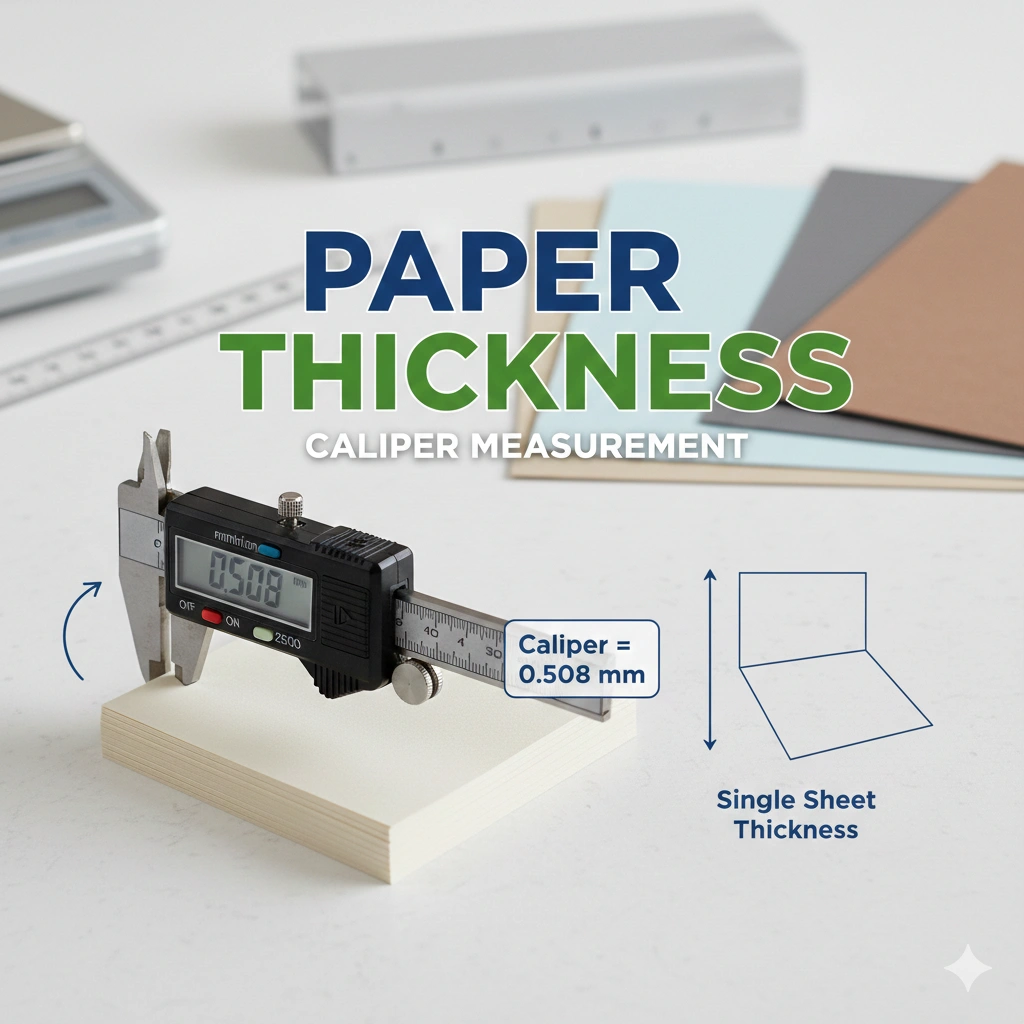
Paper thickness refers to the physical thickness of a single sheet of paper. Unlike GSM, which measures weight, thickness measures how thick the paper actually is. It is usually expressed in millimeters (mm) or microns and is also known as paper caliper in technical terms.
Understanding what is paper thickness is important for applications where rigidity, folding, or machine compatibility matters. Two papers with the same GSM can have different thickness depending on how they are manufactured. This is why paper thickness in mm is often considered alongside GSM when selecting paper for printing, packaging, or specialized uses.
What is paper thickness measured in?
Paper thickness is commonly measured in microns (µm) or paper thickness in mm, depending on industry standards and usage. These measurements indicate the actual distance between the top and bottom surfaces of a paper sheet. Unlike weight-based measurements, thickness focuses purely on physical size.
Visually, thicker paper appears more rigid and premium. Tactilely, it feels firmer and more substantial when handled. This is why thickness is often associated with quality, especially in applications like covers, packaging, and presentation materials. However, thickness alone does not define paper performance.
GSM vs Thickness Paper: How Paper Structure Affects Both
The relationship between GSM vs thickness paper is strongly influenced by how the paper is manufactured. While GSM measures weight, thickness is shaped by the internal structure of the paper. This is why paper weight vs thickness can vary significantly even within the same GSM range.
Impact of Pulp Type, Coating, and Compression
The type of pulp used in paper production plays a major role in thickness. Papers made from long or bulky fibers tend to be thicker at the same GSM, while papers made from dense, highly refined pulp are thinner. Coating also affects thickness by adding surface layers while compressing the paper structure.
Compression during manufacturing reduces air gaps between fibers. The more compressed the paper, the thinner it becomes without changing its GSM.
Calendering and Its Effect on Thickness
Calendering is a finishing process where paper passes through rollers to smooth the surface. This process increases surface quality but compresses the paper, reducing thickness. As a result, calendered papers often feel thinner than uncalendered papers with the same GSM.
This explains why smooth printing papers may have lower thickness compared to rough or textured papers of equal weight.
Why Paper Weight vs Caliper Varies Across Paper Types
Caliper refers to the measured thickness of paper. Since different paper types use different pulp blends, coatings, and compression levels, the paper weight vs caliper relationship is not fixed. For example, packaging paper, printing paper, and specialty paper all behave differently even at identical GSM values.
Understanding how structure affects both GSM and thickness helps buyers select paper that performs correctly for printing, packaging, or branding applications.
Paper GSM vs Paper Thickness: Key Differences Explained
Understanding the difference between paper GSM and thickness is crucial when selecting the right paper for printing, packaging, or professional use. Although these two terms are often used interchangeably, they measure completely different properties of paper. This clear comparison will help remove confusion and support better decision-making.
The Paper GSM vs thickness difference becomes evident when you look at how each is measured and how it impacts real-world usage. GSM focuses on weight, while thickness (or caliper) focuses on physical depth. Both play distinct roles in paper performance
|
Comparison Point |
Paper GSM |
Paper Thickness |
|
Measurement Method |
Measures the weight of one square meter of paper |
Measures the physical depth of a single sheet |
|
Unit of Measurement |
Grams per Square Meter (GSM) |
Microns (µm) or millimeters (mm) |
|
Impact on Printing |
Determines printer compatibility, ink absorption, and sheet weight |
Affects paper stiffness, opacity, and folding |
|
Impact on Handling |
Heavier papers feel more durable and premium |
Thicker papers feel firmer and more rigid |
|
Cost Implications |
Higher GSM often increases material and shipping cost |
Higher thickness may increase cost without adding weight |
Thick Paper for Printing: GSM or Thickness What Matters More?
When selecting thick paper for printing, many buyers focus only on GSM, assuming higher weight automatically means better print quality. In reality, both GSM and thickness influence printing performance in different ways. Understanding how these factors interact helps avoid print issues and equipment problems.
Printing Performance Considerations
Printing performance depends on how paper moves through the printer. Paper that is too thick may cause feeding issues, while paper that is too heavy can stress printer rollers. This is why thick printer paper must meet both weight and thickness limits specified by the printer manufacturer.
Matching paper properties to printer capability ensures smooth printing and consistent output.
Ink Absorption, Stiffness, and Printer Compatibility
Paper thickness affects stiffness, which influences how the sheet travels through the printer. Thicker paper usually offers better rigidity, reducing curling or bending. However, ink absorption depends more on coating and paper structure than GSM alone.
Coated papers may print sharply even when thinner, while uncoated thick papers may absorb more ink. Printer compatibility depends on both GSM limits and maximum paper thickness allowed by the machine.
Choosing Between GSM and Thickness for Print Quality
For high-quality printing, GSM is useful for estimating strength and durability, while thickness determines feel and rigidity. Choosing paper based only on GSM may lead to sheets that feel thinner than expected. Evaluating both GSM and thickness ensures the selected paper prints well, feeds correctly, and delivers the desired visual and tactile quality.
Paper Thickness in mm: What Buyers Should Know
Paper thickness in mm refers to the physical measurement of how thick a single sheet of paper is. Understanding what is paper thickness helps buyers select paper that meets functional, printing, and handling requirements. Unlike GSM, thickness directly affects stiffness, folding, and machine compatibility.
Typical Thickness Ranges for Common GSM Values
Paper thickness varies depending on paper type and manufacturing method. For example, low GSM papers around 70–90 GSM are typically thin and flexible, while papers in the 200–300 GSM range are noticeably thicker and more rigid. However, thickness can vary significantly even within the same GSM due to paper density and coating.
Because of this variation, GSM alone cannot reliably predict paper thickness.
Why Thickness Is Not Standardized Globally
Paper thickness is not globally standardized because different manufacturers use different pulp blends, coatings, and production processes. Regional manufacturing practices and quality standards also influence thickness. As a result, two papers with identical GSM values from different suppliers may have different thickness measurements.
This lack of standardization makes it important for buyers to review technical specifications rather than relying on GSM alone.
How Manufacturers Specify Thickness
Manufacturers usually specify paper thickness using caliper measurements, expressed in millimeters or microns. These values are provided in technical datasheets along with GSM information. Some suppliers also offer thickness tolerance ranges to account for minor variations.
Reviewing manufacturer specifications helps buyers select paper that performs consistently for printing, packaging, or branding applications.
How to Choose the Right Paper: GSM vs Thickness by Use Case
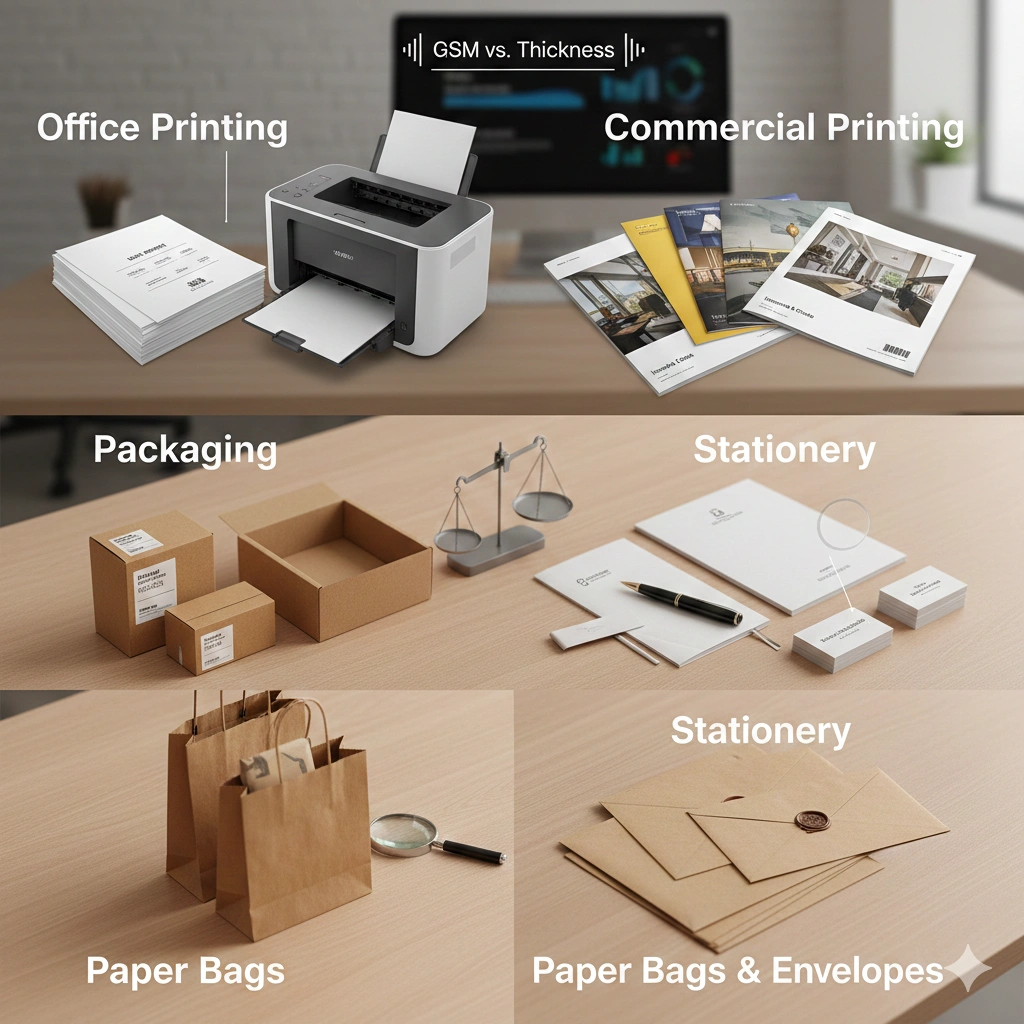
Selecting the right paper depends on how and where it will be used. Understanding paper GSM and paper thickness together helps avoid quality issues, wastage, and unnecessary costs. Below is a practical guide based on common use cases.
-
Office Printing: For everyday documents, lower paper GSM works best. Papers in the 70–90 GSM range are easy to print, economical, and compatible with most printers. Moderate paper thickness is sufficient, as flexibility and smooth feeding matter more than rigidity.
-
Commercial Printing: Brochures, flyers, and catalogs require a balance of durability and print quality. Higher paper GSM improves color output, while adequate paper thickness enhances the overall feel. Coated papers are often preferred for sharp visuals and professional presentation.
-
Packaging: Packaging demands strength and structure. In this case, both high paper GSM and greater paper thickness are important. Thicker paper provides rigidity, while higher GSM ensures durability during handling and transport.
-
Stationery: Items like letterheads, notebooks, and visiting cards benefit from moderate GSM with noticeable thickness. The paper should feel premium without being too heavy for writing or printing.
-
Paper Bags & Envelopes: For paper bags and envelopes, thickness plays a major role in tear resistance and holding capacity. Medium to high paper GSM combined with proper thickness ensures strength without making the product bulky.
Choosing paper based on use case rather than assumptions improves performance and cost efficiency. This approach reflects industry best practices and supports informed, reliable paper selection.
Paper GSM and Thickness Chart: Quick Reference Guide
Understanding paper GSM along with paper thickness in mm becomes much easier with a quick reference chart. While thickness can vary slightly depending on paper type and manufacturing process, the table below gives a practical industry-level estimate to help with everyday paper selection.
|
Paper GSM |
Approx. Thickness (mm) |
Common Usage |
|
60–70 GSM |
0.07 – 0.09 mm |
Newspapers, rough drafts |
|
80 GSM |
0.10 mm |
Office printing, notebooks |
|
100 GSM |
0.12 mm |
Letterheads, reports |
|
120–130 GSM |
0.14 – 0.16 mm |
Flyers, brochures |
|
170 GSM |
0.18 – 0.20 mm |
Posters, premium prints |
|
200–250 GSM |
0.22 – 0.28 mm |
Covers, postcards |
|
300 GSM |
0.30 – 0.35 mm |
Business cards, packaging |
Conclusion
Understanding Paper GSM vs Paper Thickness is essential for selecting the right paper for any application. GSM measures the weight of paper, while paper thickness describes how thick or thin a sheet feels. Both factors influence print quality, durability, and handling, but they are not interchangeable.
When choosing paper, it’s important to focus on the intended use rather than assumptions. For office printing, moderate GSM and thickness may suffice, while packaging or premium brochures require a careful balance of both measurements. Considering GSM ensures printer compatibility and cost efficiency, while thickness ensures rigidity and a premium feel.
At Edicon Paper Product, we help customers select the perfect paper by combining expertise in GSM, thickness, and quality. By understanding these key differences, you can make confident choices that deliver both performance and a professional finish.
Choosing the right paper is no longer guesswork, it's about making informed decisions based on knowledge of Paper GSM vs Paper Thickness.
Frequently Asked Questions (FAQs)
Here are some commonly asked questions about paper GSM vs paper thickness, answered concisely for clarity and SEO purposes:
1. What is GSM in paper?
GSM stands for Grams per Square Meter and measures the weight of paper. It indicates how heavy one square meter of a particular paper type is, helping determine durability and printing suitability.
2. What is paper thickness?
Paper thickness refers to the physical depth of a single sheet, usually measured in microns (µm) or millimeters (mm). Thickness affects stiffness, opacity, and how the paper feels in hand.
3. Is paper GSM the same as thickness?
No. GSM measures weight, while thickness measures the physical depth of a sheet. Two papers with the same GSM can have different thicknesses depending on fiber density and manufacturing.
4. Which is better: paper weight or thickness?
Neither is universally better. GSM ensures printer compatibility and cost accuracy, while thickness affects feel, folding, and opacity. The best choice depends on the intended use.
5. How thick is 100 GSM paper?
100 GSM paper typically has a thickness of around 0.12 mm, though this can vary slightly based on coating and fiber type. It is commonly used for letterheads, reports, and standard office printing.