Top GSM Paper Board Options for Digital Printing
Have you ever wondered why some digital prints look sharp, vibrant, and premium while others appear dull or flimsy?
The answer often lies in the type of GSM paper used. Even with the most advanced digital printers, the paper’s thickness and strength determine color accuracy, durability, and the overall feel of the final product.
Choosing the right GSM can elevate brochures, business cards, packaging, certificates, and marketing materials, while the wrong GSM can lead to fading, curling, and weak print quality. In this blog, we break down the best digital printing paper options across various GSM ranges and explain why brands and printers trust premium suppliers like Edicon Paper for consistent and high-performing results.
What Is GSM in Paper and Why Does It Matter?
Before exploring the top options, it’s important to understand what is GSM in paper. GSM refers to the weight of paper per square meter. Higher GSM equals thicker, stiffer, and stronger paper. For example:
• Office sheets → 70–90 GSM
• Brochures → 130–200 GSM
• Packaging boards → 300+ GSM
This measurement directly affects:
1. Paper Thickness
GSM defines gsm paper thickness, which influences feel, durability, and suitability for specific print jobs.
2. Print Sharpness & Ink Handling
Thicker sheets absorb ink more evenly. This results in sharper, richer visuals.
3. Stiffness & Structural Strength
Boards with higher GSM withstand bending, rough handling, and packaging stress.
4. Overall Professional Impact
The weight of a printed material changes how premium it feels. This is crucial for business cards, product boxes, and luxury brochures.
Understanding this helps you choose the right digital printing paper confidently.
Why GSM Matters Specifically for Digital Printing
Digital printing applies ink differently than offset printing. It requires papers with stable surfaces and controlled absorption to ensure colors appear exactly as intended.
Here’s why GSM selection directly affects digital print quality:
Better Color Accuracy
Thicker papers allow smoother color consistency, especially during high-coverage printing.
Reduced Curling
Higher GSM boards resist moisture-based curling, which is common in lighter sheets.
Premium Finish
Customers judge a printed piece by its feel. A well-selected GSM gives a professional edge.
Strength for Packaging
For boxes, tags, and product sleeves, GSM determines structural performance.
That’s why brands worldwide choose GSM carefully, often depending on product category and printing purpose.
Top GSM Paper Board Options for Digital Printing
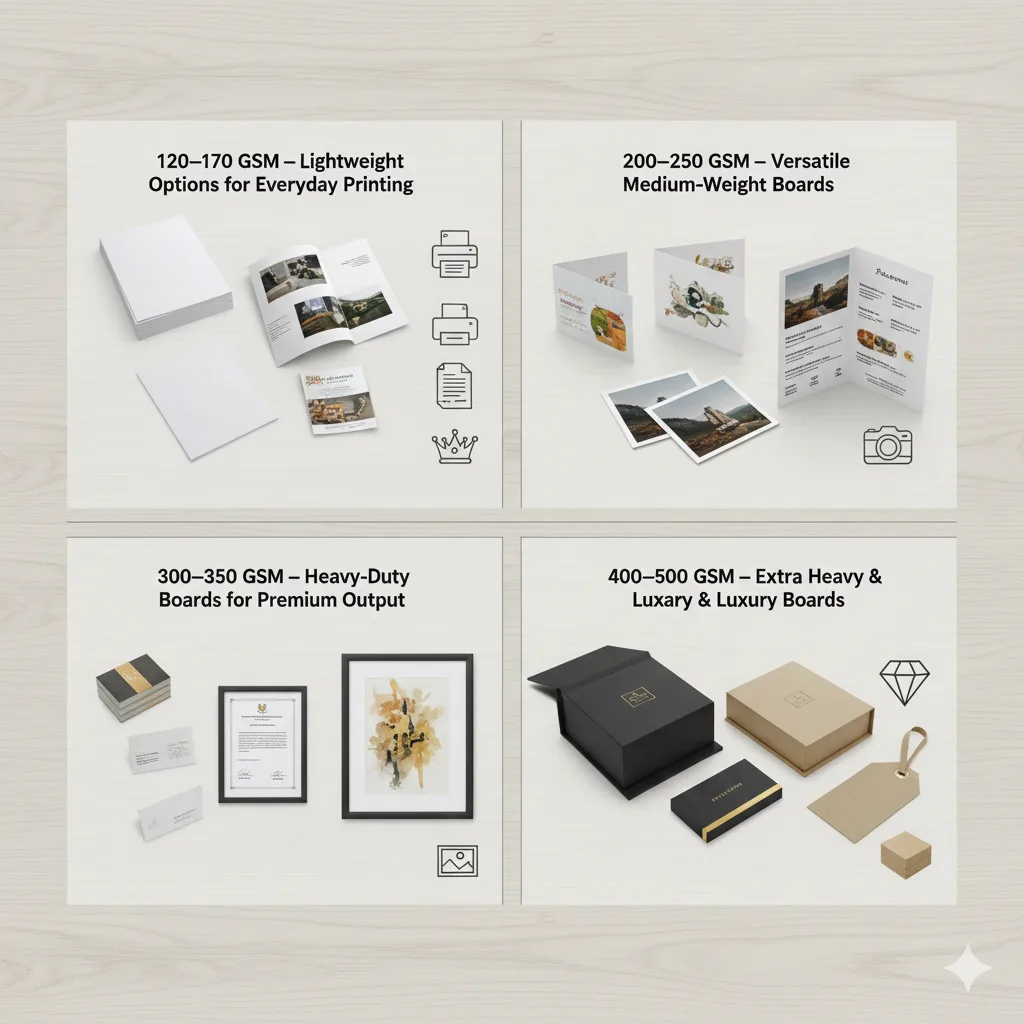
Different printing needs require different GSM groups. Below is a breakdown of the most used GSM ranges and their ideal applications.
1. 120–170 GSM — Lightweight Options for Everyday Printing
Lightweight boards strike a balance between flexibility and print clarity.
Best for:
• Flyers
• Posters
• Brochure inner pages
• Restaurant inserts
• Large-volume marketing prints
This segment is suitable for brands looking for affordable, clean, and visually appealing outputs. Many entry-level packaging jobs also start at 180 gsm paper, especially when the product is lightweight and does not require very rigid support.
2. 200–250 GSM — Versatile Medium-Weight Boards
The 200–250 GSM range is one of the most popular segments for premium printing.
Ideal for:
• Premium brochures
• Menu cards
• Invitation cards
• Book covers
• Elegant print collaterals
Most modern printers recommend 200 gsm paper for a refined feel without the heaviness of thick boards. Similarly, 250 gsm paper is widely chosen when a semi-rigid and durable finish is required, especially for product sleeves, magazine covers, and luxury flyers.
3. 300–350 GSM — Heavy-Duty Boards for Premium Output
This category offers high stiffness, durability, and a premium hand feel.
Used for:
• Business cards
• Product packaging
• Postcards
• Rigid brochures
• Brand identity materials
High-volume search keywords like 300 gsm paper are extremely popular in this category because this GSM gives a strong, professional finish while maintaining good print sharpness.
4. 400–500 GSM — Extra Heavy & Luxury Boards
This category is chosen for signature, long-lasting, or luxurious print applications.
Best for:
• Premium product boxes
• Certificates
• Rigid packaging
• High-value brand collaterals
• Gift boxes
Many brands prefer 450 gsm paper and 500 gsm paper for export packaging, cosmetic boxes, and custom rigid formats where strength and durability are non-negotiable.
Edicon Paper’s Iconic Board Collection
Edicon Paper offers a reliable range of duplex and triplex boards trusted across packaging, printing, and branding industries. Their Iconic Series is designed for high-precision printing results and consistent GSM performance.
• Iconic Ocean: Duplex Grey Back (180–450 GSM)Suitable for cartons, mono boxes, and everyday packaging with reliable rigidity.
• Iconic Era: Duplex Grey Back (180–450 GSM)Known for stable printability and smooth surface for sharp digital prints.
• Iconic Crema: Duplex Grey Back (180–500 GSM)Offers enhanced stiffness and smooth texture for premium boxes.
• Iconic Velvet: Triplex White Back (230–450 GSM)Velvet-smooth white finish ideal for premium artwork and luxury packaging. Perfect for applications starting at 230 gsm paper.
• Iconic Kraft Back: Duplex Kraft Back (250–500 GSM)Eco-friendly brown kraft appearance suited for sustainable packaging.
The entire series ranges from 180 GSM to 500 GSM, giving printers and brands the flexibility to choose the right board for everything from brochures to rigid boxes.
Which GSM Should You Choose for Different Digital Printing Needs?
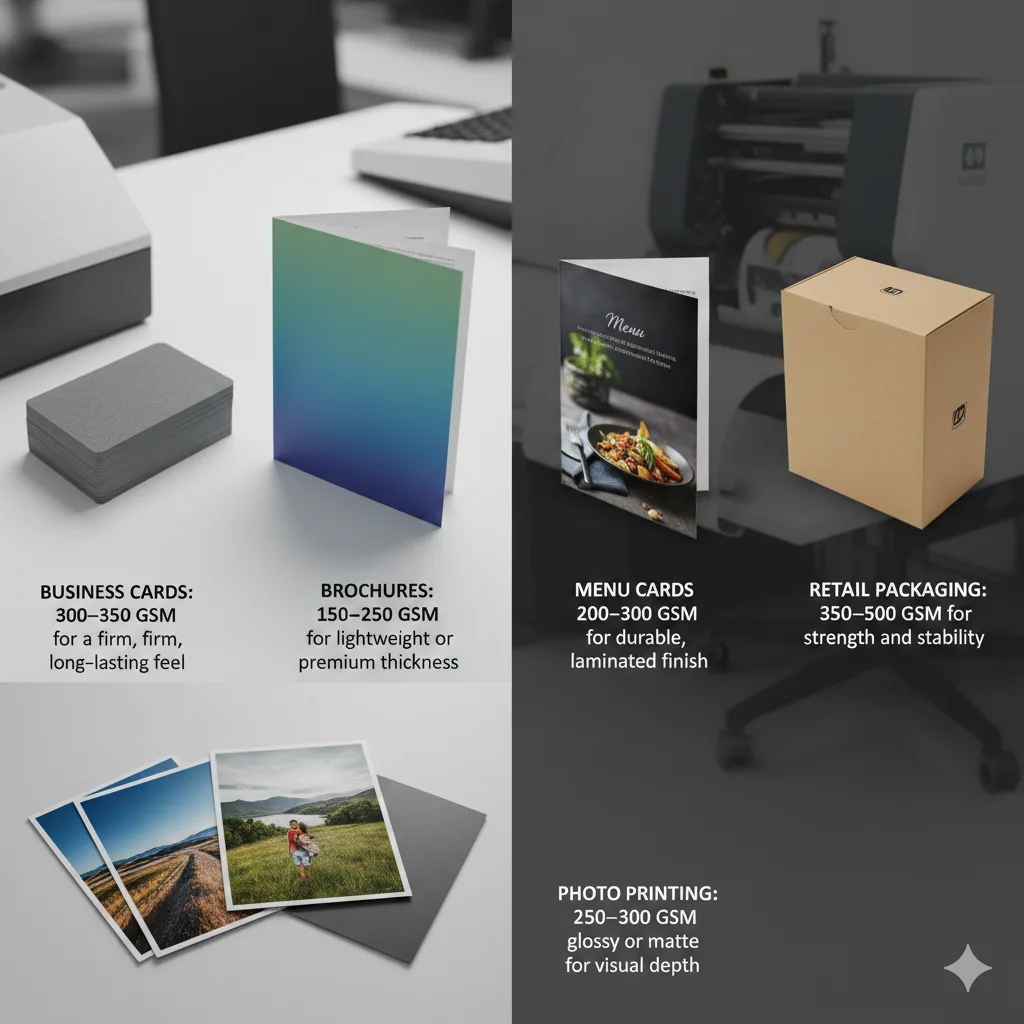
Here’s how to pick the best option:
For Business Cards
• 300–350 GSM is ideal for a firm, long-lasting feel.
For Brochures
• 150–250 GSM works best depending on whether you want lightweight or premium thickness.
For Menu Cards
• 200–300 GSM for a durable, laminated finish.
For Retail Packaging
• 350–500 GSM for strength and stability.
For Photo Printing
• 250–300 GSM glossy or matte boards deliver the best visual depth.
High-volume searches like 200 gsm paper, 250 gsm paper, 300 gsm paper, and 450 gsm paper all represent real-world GSM choices that brands commonly prefer.
Conclusion
Whether you're designing promotional brochures, elegant menu cards, luxury product boxes, or high-end business cards, choosing the right GSM paper is crucial for achieving top-quality results. GSM affects everything thickness, durability, color sharpness, and overall brand impression.Understanding the role of gsm paper thickness, selecting the right category, and pairing it with the best digital printing paper helps you achieve consistency and professional-grade finishing every time.
Premium suppliers like Edicon Paper make this process easier by offering a wide GSM range from 180 to 500 GSM under their Iconic Series. With duplex and triplex options suitable for all printing and packaging requirements, their boards are trusted across industries that value sharp detail, strength, and stability.
The next time you choose your printing material, remember: GSM isn’t just a number it’s the foundation of print quality. And with the correct selection, your prints won’t just look good; they’ll feel exceptional.
FAQs
1. What is GSM in paper and why does it matter?
GSM indicates paper weight and thickness. It directly affects durability, printing performance, and visual quality.
2. Which GSM paper is best for digital printing?
For most applications, 150–350 GSM works well. For packaging, 350–500 GSM is preferred.
3. Is higher GSM better for colour printing?
Yes. Higher GSM provides more stability, ensuring vibrant and sharper prints.
4. How do I check gsm paper thickness?
You can use a GSM tester, micrometer, or refer to standard gsm paper thickness guidelines.