Duplex Board Manufacturer & Exporter in Indonesia
Duplex board is a coated paperboard used for printed cartons and consumer packaging. Buyers in Indonesia often need it for food, pharmaceutical, cosmetics, personal care, FMCG, and general retail boxes.
A search for a duplex board exporter in Indonesia can have two meanings. You may want a supplier based in Indonesia, or an international exporter serving Indonesian buyers. Always confirm the supplier’s location, shipping terms, production role, and export experience before placing an order.
This guide explains the main grades, GSM options, packaging uses, quality checks, and import considerations. It also provides a practical checklist for requesting samples and wholesale quotations.
What Is Duplex Board and Why Is It Used?
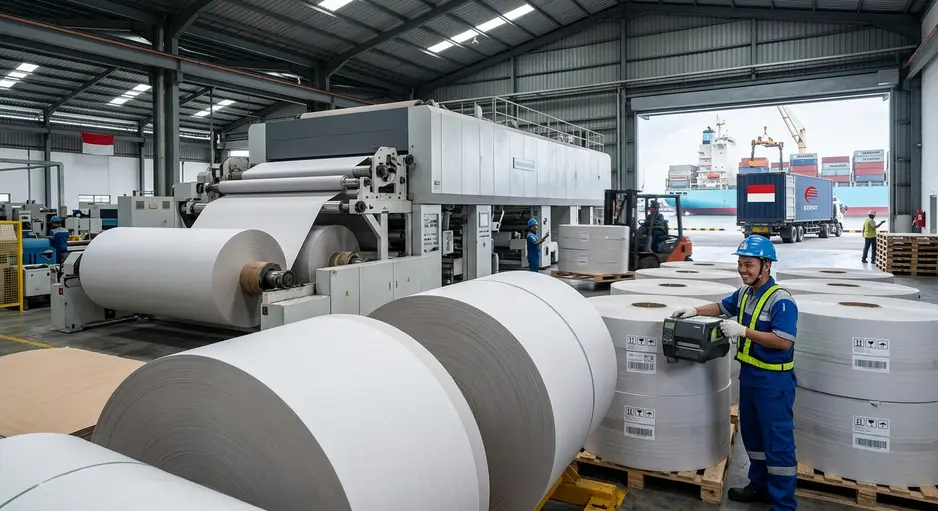
Duplex board is a multilayer paperboard with a smooth, coated face. This printable side is usually white, while the reverse may be grey or white. Its layered construction gives it useful stiffness without making the finished carton too heavy.
How Duplex Paper Board Is Manufactured
Layers of paper fiber are formed and joined to create the board structure. Depending on the grade, the fiber may come from recovered paper, virgin sources, or a selected mix. A coating is then applied to the printing surface to improve brightness, smoothness, and ink holdout.
The coated paper board may also be finished through calendaring. This process helps create a more even surface for printing and converting. The exact fiber mix, coating, and finishing method can vary between manufacturers.
Key Performance Benefits
- Good stiffness in relation to board weight
- Smooth surface finishing for clear graphics
- Suitable performance on many offset-printing lines
- Effective creasing, folding, and die-cutting
- Cost-efficient production of folding cartons
- Availability in sheets or reels, depending on the supplier
Which Duplex Board Grade Should Buyers Choose?
The right grade depends on the product, carton design, printing process, budget, and expected appearance. Buyers should compare physical performance rather than select a board only by price or grammage.
Grey Back Duplex Board
Grey back duplex board usually contains a high share of recycled fiber. It provides a white coated printing face and a grey reverse. It is often selected for household products, general retail cartons, garments, and other applications where the inner surface is not a key visual feature.
This grade can offer a practical balance between print quality and cost. However, the shade, cleanliness, and recycled-fiber content may differ between producers and batches. Representative samples should be checked before a bulk purchase.
White Back Duplex Board
White back duplex board has a cleaner-looking reverse side. It is useful when both surfaces may remain visible or when the pack needs a brighter internal appearance. Common applications can include cosmetics, personal care products, pharmaceuticals, and premium retail cartons.
A white reverse does not automatically mean better strength. Caliper, stiffness, coating quality, grain direction, and folding behavior still need to match the carton design.
Recycled and Virgin-Fiber Options
Recycled duplex board is generally economical and supports the use of recovered fiber. Its appearance may vary with the fiber mix. Virgin fiber duplex board often provides a more uniform appearance, but it may cost more.
For sensitive products, buyers should review the full construction and intended contact conditions. Recycled board should not be assumed to meet direct food-contact requirements. Certified sourcing and sustainability claims should also be checked against current documents.
Duplex Board GSM Range and Thickness
Common buying enquiries may cover an approximate duplex board GSM range of 200 to 500 GSM. Actual availability depends on the manufacturer. GSM measures the weight of one square metre, while caliper measures thickness. These figures are related, but they are not interchangeable.
Select the specification based on carton dimensions, product weight, stacking needs, printing method, and converting speed. Sheet size, reel width, dimensional tolerance, and grain direction should also be stated in the purchase order.
Where Is Duplex Board Used in Packaging?
FMCG and Folding Carton Manufacturing
Duplex board sheets for carton boxes are widely used in folding carton manufacturing. Typical applications include soap, detergent, toothpaste, personal care, garment, household product, and dry-food outer cartons.
A detergent box may need high stiffness paper board and reliable moisture performance. A cosmetics carton may place more value on brightness, smoothness, and premium print reproduction.
Pharmaceutical and Healthcare Cartons
Pharmaceutical packaging board needs clear printing, readable barcodes, neat folds, and consistent die-cutting. Batch consistency is also important when several carton runs must match in shade and dimensions.
Buyers should request supporting documentation for any compliance claim. A product should not be described as pharmaceutical compliant only because it has a smooth surface or clean appearance.
Food Packaging Applications
Duplex paper board may be used for indirect food packaging or as an outer carton. Direct contact requires a separate review of the board, coating, printing inks, barriers, and local rules. An inner pouch, liner, tray, or other functional barrier may be needed.
Food packaging board requirements should be agreed for the exact product and use. Indonesian buyers may also need to review relevant BPOM guidance and obtain suitable test documents before commercial production.
Printing and Finishing
An appropriately coated duplex board can support offset printing, lamination, varnishing, foil stamping, embossing, creasing, and die-cutting. Results depend on surface strength, smoothness, moisture balance, ink settings, and converting equipment.
For premium duplex board for printing applications, run a press trial using the planned inks and finishing process. A visual sample alone may not reveal ink drying, dusting, cracking, or delamination issues.
How Do You Evaluate a Duplex Board Exporter?
Request a Complete Technical Data Sheet
A reliable duplex board manufacturer or supplier should be able to discuss measurable requirements. Ask for the test methods used, acceptable tolerances, and the frequency of quality checks.
- Nominal GSM and tolerance
- Caliper or board thickness
- Moisture level
- Stiffness or bending resistance
- Cobb value for water absorptiveness
- Brightness, whiteness, and surface smoothness
- Ply bond or internal bond
- Burst strength, where relevant
- Sheet dimensions and tolerances
- Grain direction
Common reference methods include ISO 536 for grammage, ISO 534 for thickness, ISO 535 for Cobb testing, ISO 2493 for bending resistance, and ISO 2470 for brightness. Relevant TAPPI methods may also be used. The agreed method should appear in the specification.
Test Samples on Your Converting Line
- Request sheets from the production grade you intend to buy.
- Measure GSM and thickness at several points.
- Run printing, ink-drying, and rub-resistance checks.
- Test scoring, folding, and die-cutting.
- Inspect the board for dusting, cracks, and delamination.
- Compare the results with the written specification.
Testing matters because laboratory figures do not always predict performance on every printing and carton-making line. Grain direction and storage conditions can also affect the result.
Verify Manufacturing and Export Capabilities
Confirm whether the business is a manufacturer, trader, or export partner. Review production capacity, batch traceability, quality controls, pallet protection, complaint handling, and export documentation.
Claims involving ISO systems, FSC, PEFC, food contact, or other certifications should be supported by current and verifiable documents. Ask whether the certificate covers the company, facility, product, and transaction relevant to your order.
Watch for Supplier Red Flags
- No technical data sheet or written tolerance
- Food-grade claims without supporting evidence
- No representative production samples
- Vague lead times or shipping responsibilities
- Unusually broad GSM variation
- No written complaint or replacement process
- Certificates that cannot be verified
What Should Buyers Know About Exporting to Indonesia?
Confirm Classification and Import Requirements
Tariff classification may depend on the coating, fiber composition, multilayer construction, and whether the board arrives in sheets or reels. Do not assign a fixed HS code based only on the product name.
The Indonesian importer should confirm the classification and current requirements through the National Single Window, the Directorate General of Customs and Excise, the Ministry of Trade, or a licensed customs broker. Required permits and reports may vary by shipment.
Prepare the Export Documents
Documents for bulk duplex board export to Indonesia may include:
- Commercial invoice
- Packing list
- Bill of lading
- Certificate of origin
- Insurance certificate, when applicable
- Technical data sheet
- Certificate of analysis
- Requested sustainability documents
The buyer and exporter should agree on the required documents before production or shipment. This reduces the risk of customs delays and unexpected costs.
Protect the Board During Sea Freight
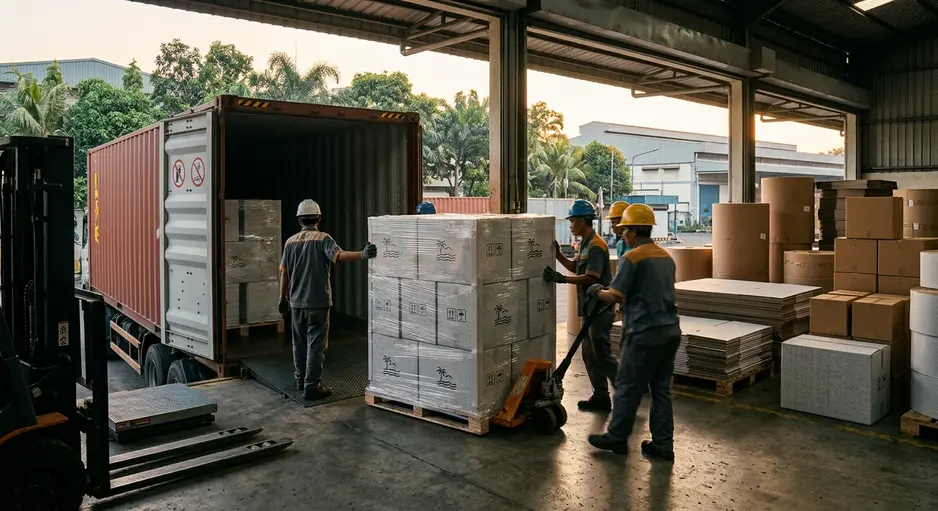
Paperboard can absorb moisture during storage and transport. Use moisture-resistant wrapping, edge protection, strong export-grade pallets, and suitable load restraints. Container moisture management or desiccants may be considered based on the route and season.
State pallet height, wrapping, corner protection, load distribution, and sheet protection in the purchase order. Good packaging helps limit warped sheets, crushed edges, and moisture damage.
Agree on Incoterms
Under FOB terms, the buyer usually manages the main freight. With CFR or CIF, the exporter arranges sea transport, with insurance included under CIF. DAP places more delivery responsibility on the seller, although import clearance and related charges must be defined.
Always state the named port or destination, Incoterms version, and responsibility for demurrage, customs costs, and destination charges.
How Can Buyers Get an Accurate Wholesale Quote?
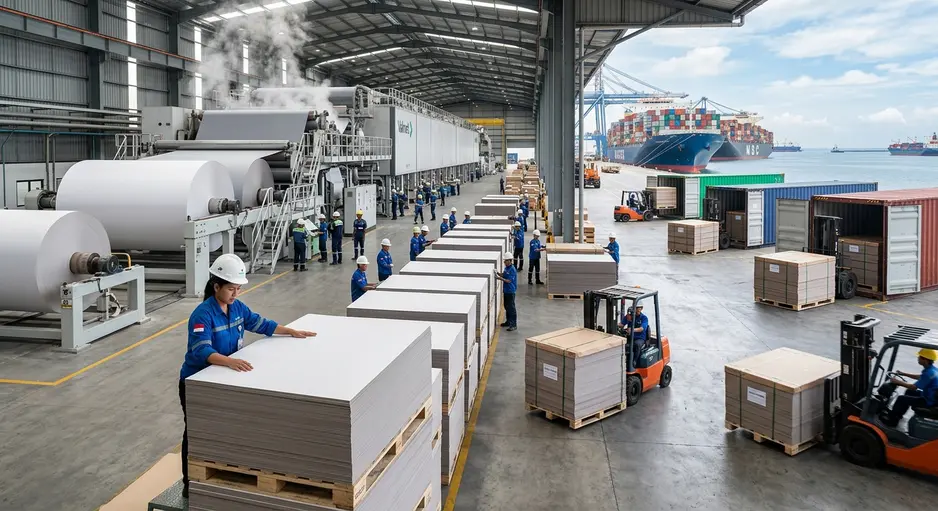
Send a complete request for quotation to the duplex board supplier. Clear specifications allow the seller to estimate production, packing, freight, and lead time more accurately.
- Grey back or white back grade
- Recycled or virgin-fiber preference
- GSM, caliper, and acceptable tolerances
- Sheet size or reel dimensions
- Required grain direction
- Printing and finishing process
- Intended packaging application
- Monthly or annual order volume
- Destination port in Indonesia
- Preferred Incoterm
- Testing or certification requirements
- Target delivery schedule
Do not compare offers only by price per ton. Review the total landed cost, including freight, insurance, duties, taxes, customs fees, warehousing, converting waste, rejected stock, and production downtime.
Buyers considering Edicon Paper Product can use the company’s official website to request current product information, sample availability, GSM and size options, MOQ, lead time, and export terms. Confirm all manufacturing, certification, and market-service claims in writing before ordering.
Duplex Board Exporter in Indonesia
Choose Specifications Before Choosing a Price
A dependable paperboard purchase starts with a clear technical specification. Compare GSM, caliper, stiffness, Cobb value, brightness, surface quality, grain direction, and converting performance. Then confirm documents, packaging, shipping terms, and total landed cost.
For the best result, request representative samples and test them on your production line. A well-documented order helps both buyer and exporter maintain consistent quality, reduce waste, and protect the board throughout delivery to Indonesia.
Frequently Asked Questions
1. What is duplex board used for?
It is mainly used for printed folding cartons. Applications include cosmetics, personal care products, pharmaceuticals, soap, detergent, garments, dry-food outer packs, and general retail packaging.
2. What GSM duplex board is best for carton boxes?
There is no single best GSM. The right choice depends on carton size, product weight, board thickness, stiffness, grain direction, stacking conditions, and converting process. Test the planned grade before bulk production.
3. What is the difference between grey back and white back board?
Grey back board has a grey reverse and is often chosen for economical general packaging. White back board has a cleaner reverse and may suit cartons where the inside remains visible. Performance still depends on the full specification.
4. Can duplex board be used for food packaging?
It may be used for indirect food contact or outer cartons. Direct contact needs a specific compliance review. Recycled grades may require an inner pack, liner, or functional barrier.
5. Is duplex board suitable for offset printing?
Yes, appropriately coated grades can provide good offset-printing results. Surface smoothness, ink holdout, moisture, coating strength, drying conditions, and press settings all affect print quality.