Best GSM Duplex Board Option for Toy Packaging Industry
Toy packaging must protect the product, look attractive on a shelf, and perform well during transport. It also needs clear printing for instructions, age labels, warnings, barcodes, and brand graphics. Choosing the right paperboard is therefore a key production decision.
For many standard retail toy cartons, 300–350 GSM coated duplex board is a practical starting point. Lightweight toys may use 250–300 GSM, while large boxes, heavier toys, and window cartons may need 350–450 GSM. The final choice depends on carton size, toy weight, moisture, finishing, and transport conditions.
What Does GSM Mean in Duplex Board?
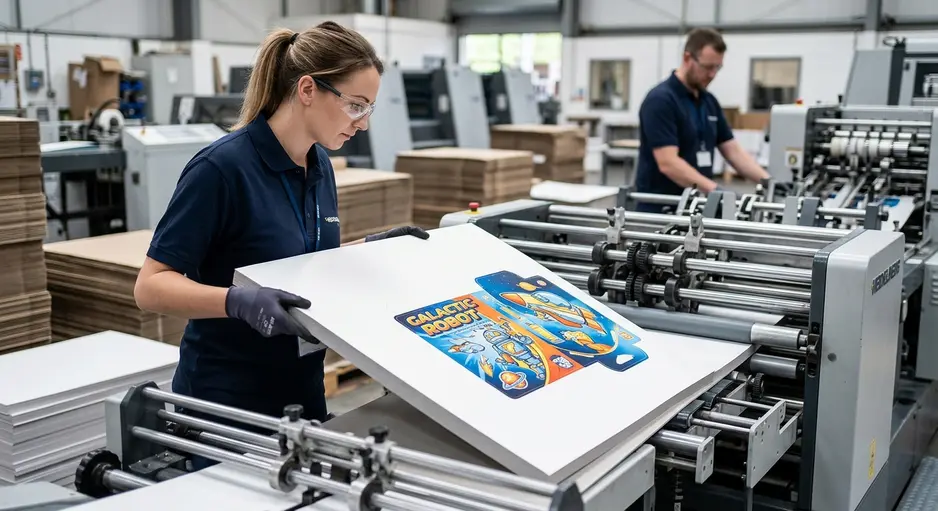
GSM means grams per square metre. It measures the weight of the paperboard. For example, one square metre of 350 GSM board weighs 350 grams. This helps buyers compare grades and estimate material use.
However, GSM does not reveal the full strength of a packaging sheet. Fiber structure, density, moisture, coating, and manufacturing quality also affect performance. This is why two boards with the same grammage may behave differently during printing, folding, and stacking.
GSM vs. Duplex Board Thickness
Duplex board thickness refers to the sheet’s caliper, which is normally measured in millimetres or microns. Grammage and thickness are related, but they are not interchangeable.
A lower-density sheet may be thicker than a denser sheet of the same weight. It may also have different stiffness. Buyers should request both GSM and caliper data, including the permitted tolerances for each value.
A universal GSM-to-millimetre conversion should not be used. The correct conversion depends on the manufacturer’s grade-specific technical data.
Why Stiffness Matters More Than Weight Alone
A high stiffness paper board helps carton panels stay flat and square. It reduces bulging, supports stacking, and gives the box a cleaner shelf appearance. Stiffness should be checked in both the machine direction and cross direction.
Other important properties include folding strength, surface smoothness, moisture absorption, ply bond, coating consistency, and resistance to delamination. Together, these factors determine whether a packaging duplex board will work well on the production line.
Which GSM Duplex Board Is Best for Toy Packaging?
The suitable GSM for toy packaging cartons depends on the product and box structure. The following ranges are practical starting points rather than fixed specifications.
250–300 GSM: Small, Lightweight Toys
This duplex board GSM range can suit compact cartons for cards, puzzles, craft items, and other light products. It works best when the box has short panels, little internal movement, and no large display window.
300–350 GSM: Standard Retail Toy Boxes
This is often the best balance of stiffness, printing quality, folding performance, and cost. It can suit many small-to-medium toys sold in standard folding cartons.
350–400 GSM: Medium or Heavier Toys
This range provides more support for larger panels and greater handling stress. It may also be useful when the carton includes a window, hanger tab, or detailed die-cut area.
400–450+ GSM: Premium and Large Cartons
High GSM duplex board can create a more rigid appearance and support embossing or other premium finishes. It is commonly considered for large boxes, deep cartons, and designs with wide unsupported panels.
Alternative Structures for Oversized Toys
Simply increasing GSM is not always the right answer. Very heavy or oversized toys may require corrugated packaging or a litho-laminated structure. These options can provide better protection during stacking and distribution.
Is 300 GSM Duplex Board Suitable for Toy Cartons?
Yes, 300 GSM can be suitable for small and medium lightweight toys. It is most effective when the carton is compact and has a limited window area. An insert can also help control product movement.
Large panels may bend even when the toy itself is light. A sample carton should therefore be tested before a bulk order is approved.
Can Higher GSM Cause Production Problems?
A heavier board can increase material and freight costs. It may also require changes to creasing tools, die-cutting pressure, folding settings, and glue application.
Poor crease geometry can cause cracking along printed folds. Grain direction and coating type also influence fold quality. The best board is the grade that meets packaging strength requirements without creating waste or production delays.
How to Select Toy Box Packaging Material
A good paperboard thickness selection process should consider the complete package. Use these five steps before placing a production order.
- Measure the product: Record the toy’s weight, size, centre of gravity, and any parts that may move during transport.
- Review the carton shape: Check panel width, box depth, tuck flaps, hanger tabs, and unsupported areas.
- Assess distribution: Consider stacking, warehouse handling, export routes, vibration, and possible drops.
- Confirm converting needs: Test die-cutting, creasing, folding, gluing, printing, and window patching.
- Produce a sample: Use the intended board, ink, adhesive, coating, insert, and production settings.
Match Strength to Toy Weight and Carton Size
Weight is important, but carton size matters just as much. A large, lightweight toy may need a stiffer folding carton board because broad panels can bow or crease under pressure.
Internal supports can reduce stress on the outer carton. Well-designed inserts also hold the toy in place and prevent impact damage.
Account for Display Windows
A window removes load-bearing material from the carton. A large cutout can weaken the front panel, corners, and surrounding folds.
Possible solutions include increasing GSM, reducing the window size, changing its position, adding an insert, or reinforcing the carton design. Window film adhesion should also be checked after humidity and transport testing.
Consider Humidity and Storage
Paperboard can lose stiffness when it absorbs moisture. This is especially relevant in humid warehouses, monsoon conditions, long export routes, and areas where condensation may occur.
Ask for moisture content and Cobb water-absorption data. If moisture resistant duplex board is required, request clear technical details about the treatment. Avoid relying on broad claims such as “waterproof” unless test evidence supports them.
Check Grain Direction and Crease Performance
Grain direction affects stiffness, folding, and carton squareness. It should be matched to the package design and the main folds.
Trial creasing helps identify cracking, spring-back, and poor closure before mass production. It also confirms that the durable packaging sheets are compatible with existing converting equipment.
Why Use Coated Duplex Board for Printed Toy Boxes?
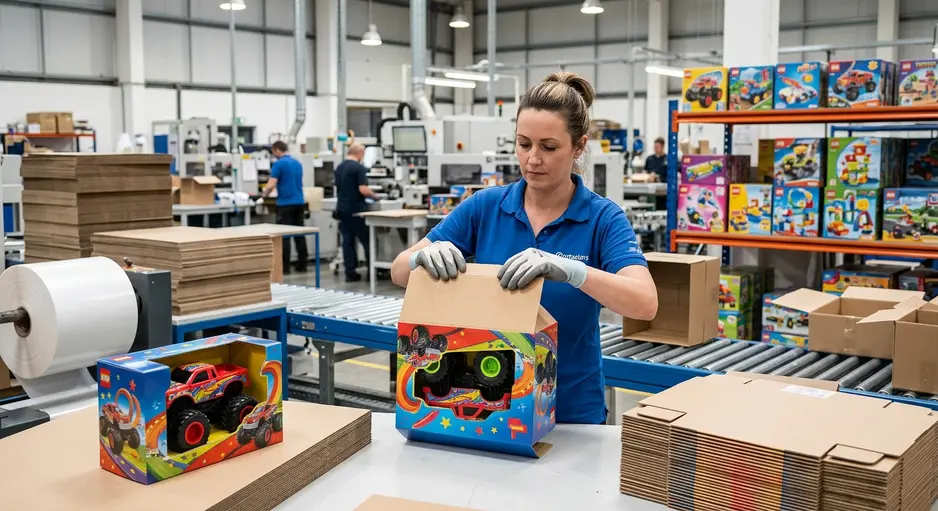
A smooth coated paper surface supports bright illustrations, fine text, product details, barcodes, and QR codes. This makes coated duplex board a useful printing quality paperboard for colorful toy packaging.
Depending on the grade, it may support offset printing, protective coatings, lamination, spot UV, foil stamping, embossing, and window patching. Each finish should be tested because it can affect folding, glue bonding, recyclability, and cost.
Grey-Back vs. White-Back Board
Grey-back board is a cost-effective choice when the inside of the carton is not a major part of the presentation. It is often considered for everyday retail packaging.
White-back board provides a cleaner interior and may suit premium toy boxes or designs where the inside surface remains visible. White-back is not automatically stronger. Performance depends on the grade, fiber construction, stiffness, and converting quality.
Real-World GSM Selection Examples
These examples are starting points for trials. They are not laboratory-approved specifications for every carton.
Small Educational Toy Carton
A compact box holding a lightweight learning toy may begin with 250–300 GSM duplex paper board. The main checks are print clarity, fold accuracy, glue strength, and resistance to normal shelf handling.
Medium Toy with a Display Window
A box with a large front window may require a 350–400 GSM trial. Test panel bowing, corner strength, window-film adhesion, and the stability of the carton when stacked.
Large Battery-Operated Toy
A 400–450 GSM trial with a well-designed insert may suit some large battery-operated toys. If the carton deforms during testing, compare it with a litho-laminated corrugated structure rather than adding more paperboard weight alone.
What Quality Tests Should Duplex Board Pass?
Reliable child product packaging solutions require more than a visual check. Buyers should request technical data and confirm that the test methods are suitable for the intended market.
Paperboard Quality Standards to Verify
- Grammage and tolerance, commonly measured with reference to ISO 536 or TAPPI T 410
- Thickness or caliper, commonly assessed under ISO 534 or TAPPI T 411
- Machine-direction and cross-direction stiffness
- Moisture content and Cobb water absorption
- Folding and crease performance
- Surface smoothness, brightness, and whiteness
- Ply bond and delamination resistance
- Ink, coating, and glue adhesion
Test the Finished Carton
Sheet data alone cannot predict every real-world result. Test the finished package with the actual toy and insert.
- Drop and impact tests
- Compression and stacking tests
- Vibration and transport simulation
- Humidity conditioning
- Rub and scuff resistance
- Glue-seam and window-patch adhesion
ISTA procedures and ASTM D4169 can provide useful guidance for distribution testing. The right procedure depends on the product, shipping route, and sales market.
Safety and Sustainability Checks
Inks, coatings, adhesives, and window films should meet the rules of the target market. Toy warnings, age labels, and other required information should be reviewed by a qualified toy-safety specialist.
If responsible fiber sourcing is required, ask for valid FSC or PEFC chain-of-custody documentation. Claims such as “eco friendly packaging board,” “fully recyclable,” or “100% sustainable” should only be used when reliable evidence supports them.
How to Choose a Duplex Board Supplier for Toy Packaging
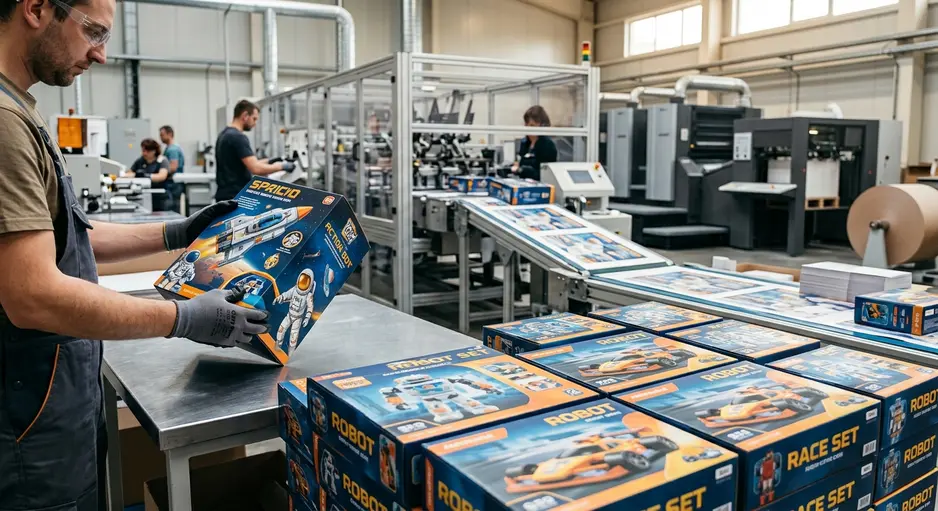
A dependable duplex board supplier for toy packaging industry orders should provide clear specifications, trial material, and consistent batches. Price per tonne matters, but production yield and rejection rates may have a greater effect on total cost.
Questions to Ask a Manufacturer or Supplier
- Which GSM grades and sheet sizes are available?
- What are the GSM and caliper tolerances?
- Is the grade grey-back or white-back?
- Are technical data sheets and batch reports available?
- Can trial sheets be supplied before a bulk order?
- What are the minimum order quantity and lead time?
- How are sheets protected from moisture during delivery?
- Are custom sizes available to reduce trim waste?
Evaluating Bulk Orders
When sourcing bulk GSM duplex board for packaging manufacturers, approve a production sample before confirming volume. Add agreed tolerances, packing requirements, and inspection terms to the purchase specification.
Retain reference sheets from the approved batch. This makes it easier to compare color, coating, caliper, print response, and crease behavior when later deliveries arrive.
For available specifications, premium duplex board sheets for printing, sample requests, and bulk-order details, contact Edicon Paper Product. Confirm current technical information directly before selecting a grade for packaging applications.
Best GSM Duplex Board for Packaging
Choose the Right Board Through Testing
300–350 GSM coated duplex board is a sensible starting option for many retail toy boxes. Move up or down based on toy weight, carton dimensions, window cutouts, humidity, finishes, and test results.
Before ordering, compare technical data, produce a complete sample, and test the packed carton. Contact Edicon Paper Product to request current specifications, available sheet sizes, samples, and quotation details for your packaging requirements.
Frequently Asked Questions
1. Is 350 GSM strong enough for toy boxes?
It is suitable for many medium-sized cartons. Actual strength also depends on stiffness, carton dimensions, window area, grain direction, inserts, humidity, and handling conditions.
2. What is the difference between GSM and thickness?
GSM measures weight per square metre. Thickness measures caliper. Two sheets with the same GSM may have different thickness, density, and stiffness because their fiber structure is different.
3. Is coated board good for toy packaging?
Yes. Its smooth face supports clear graphics and common finishing processes. Suitability still depends on crease performance, stiffness, moisture exposure, adhesion, and the required interior appearance.
4. Is high GSM board always better?
No. Excess weight can raise costs and cause creasing or folding problems. A well-designed carton with the right stiffness and inserts may perform better than a heavier board used in a weak structure.
5. Can duplex board be used for heavy toys?
It can suit some heavy toys when the carton and insert are properly designed. Very heavy or oversized products may need corrugated or litho-laminated packaging for safer distribution.