Kraft Board Manufacturer & Exporter in Philippines
Demand for strong and practical packaging is rising across many industries in the Philippines. Carton converters, distributors, retailers, and industrial buyers need board that performs well during production, storage, and delivery. International sourcing can help them secure the right grade, volume, and format for each application.
Edicon Paper Product is an Indian kraft board manufacturer and export supplier serving packaging buyers. It should be viewed as a supplier to the Philippines, not as a kraft board manufacturer in Philippines. This guide explains board types, specifications, applications, quality checks, shipping needs, and the questions buyers should ask before ordering.
Why Is Kraft Board in Demand in the Philippines?
Carton Manufacturing and E-Commerce Packaging
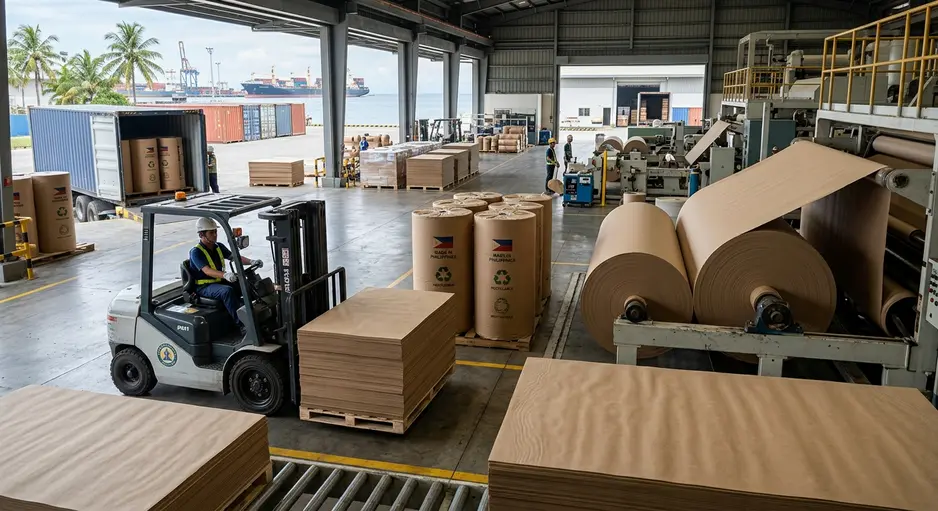
Kraft-based materials are widely used for shipping cartons, retail packs, protective layers, and industrial boxes. These formats support e-commerce, food processing, electronics, agriculture, retail, textiles, and other product sectors.
For carton box manufacturing, the material must offer a suitable balance of weight, stiffness, strength, and print quality. A lighter board may lower material use, but it must still protect the packed product. Consistent board also reduces feeding, cutting, folding, and gluing problems during conversion.
Interest in Sustainable Paper Packaging
Businesses are paying closer attention to recyclable materials and responsible fibre sourcing. Kraft paper packaging can help reduce reliance on some plastic packaging formats. It also gives brands a natural appearance that works well for retail and e-commerce packs.
However, kraft board is not automatically sustainable. Buyers should consider the fibre source, recycled content, coatings, adhesives, inks, and local recycling systems. These factors affect whether a pack supports wider sustainable paper packaging solutions.
Recycled and Virgin Fibre Choices
Recycled kraft board is often selected for cost-conscious and circular packaging uses. Virgin kraft board may be preferred when buyers need greater consistency, strength, cleanliness, or surface quality. Blended grades can offer a useful balance between performance and resource efficiency.
What Types of Kraft Board Can Buyers Import?
Brown Kraft Board
Brown kraft board has a natural appearance and is used for cartons, separators, backing sheets, inserts, and protective packaging. It can also support simple printed branding. Buyers should confirm shade consistency, surface smoothness, print method, and ink performance before placing a bulk order.
Kraft Paper Board and Packaging Board
Kraft paper is generally lighter and more flexible. Kraft paper board has greater grammage, thickness, and rigidity. Commercial terms can vary between suppliers, so a request for “thick board” is not precise enough.
Buyers should state both GSM and caliper. GSM measures weight per square metre, while caliper measures physical thickness. Two products with the same GSM may have different thickness, density, stiffness, and converting performance.
Corrugated Kraft Board and Liner Uses
Kraft liner and recycled liner are used as parts of corrugated packaging structures. Their performance can affect compression, puncture resistance, bonding, stacking, and resistance to handling damage. Important checks may include burst, tensile, ring crush, moisture, and Cobb values.
Flat kraft board sheets should not be confused with finished corrugated fibreboard. A buyer must clearly state whether the requirement is for liner material, flat sheets, reels, or completed corrugated board.
Duplex and Specialty Grades
Duplex kraft board is sometimes used as a broad buying term, but duplex board is a separate multilayer paperboard category. Buyers should define the fibre layers, surface finish, reverse side, coating, and intended use rather than relying only on the product name.
Moisture resistant kraft board or coated material may be needed for humid storage, chilled products, or other demanding uses. Added barriers can affect recyclability, printing, sealing, and food-contact suitability, so these points need separate review.
Specifications to Define
- Grammage: Required GSM and acceptable tolerance.
- Thickness: Caliper in microns or millimetres.
- Fibre: Virgin, recycled, or blended material.
- Finish: Natural, smooth, coated, or uncoated.
- Format: Sheets, reels, or custom dimensions.
- Performance: Burst, tensile, Cobb, stiffness, or compression values.
- Packing: Wrapping, pallet type, edge protection, and loading method.
Which Packaging Applications Need Kraft Board?
Kraft Board Sheets for Carton Manufacturing
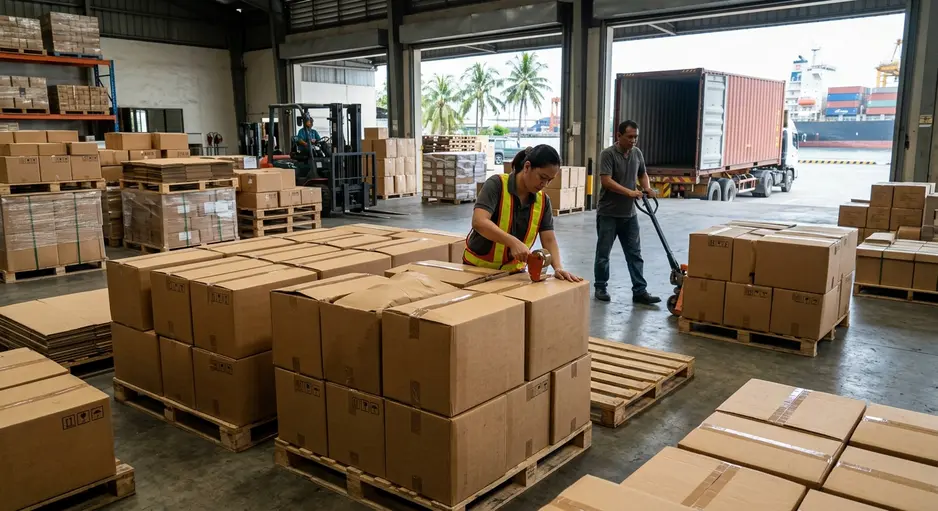
Kraft board sheets for carton manufacturing can be converted into folding cartons, partitions, pads, sleeves, separators, and protective inserts. Sheet dimensions must suit the cutting plan and production equipment. Grain direction can also influence folding, stiffness, and dimensional stability.
A carton converter needs consistent GSM, caliper, and sheet size. Variations can increase machine waste, slow production, or change the fit of the finished pack.
Food and Consumer Product Packaging
Food packaging board may be used for dry-food cartons, takeaway sleeves, outer boxes, and secondary packaging. Standard material should not be described as food-safe without suitable declarations, controls, and testing for the intended application.
Direct food contact, fatty products, frozen food, or high-moisture conditions may require special barriers. Buyers should also review the inks, coatings, adhesives, and converting process used in the completed package.
Industrial Paper Board Applications
Industrial paper board applications include packaging for auto parts, appliances, hardware, electronics, textiles, and agricultural goods. These products may need strong puncture resistance and reliable stacking performance. The chosen packaging board must match product weight, transport conditions, storage time, and handling risk.
Illustrative Buyer Scenarios
- Carton converter: Needs stable GSM and accurate dimensions to reduce cutting and machine waste.
- Frozen-food exporter: Requires tested moisture performance and suitable wet-strength properties.
- E-commerce supplier: Looks for a high strength packaging material that handles stacking and repeated movement.
How Do You Evaluate a Kraft Board Manufacturer?
Request Technical Data, Not Only GSM
GSM is important, but it does not provide a complete picture. A premium kraft board for packaging applications should be evaluated against measurable needs. The test requirements depend on whether the board will be printed, folded, corrugated, stacked, chilled, or exposed to humidity.
- Grammage and tolerance
- Caliper and density
- Burst and tensile strength
- Tear resistance
- Cobb water absorption
- Stiffness or compression performance
- Moisture content
- Shade and surface consistency
Commonly referenced methods include ISO 536 for grammage, ISO 534 for thickness and density, ISO 1924 for tensile properties, ISO 2759 for bursting strength, and ISO 535 for water absorption. The purchase agreement should identify the agreed method and tolerance.
Check Fibre and Quality Records
Ask whether the grade contains virgin, recycled, or blended fibre. If responsible sourcing is important, request current certification and chain-of-custody details. Environmental claims should be accepted only when supported by valid documents.
A reliable kraft board supplier for packaging industry buyers should be able to discuss specifications and quality controls clearly. Request a certificate of analysis or a batch test report where available and agreed.
Review Production and Customization
Confirm the available GSM kraft board range, reel and sheet formats, cutting options, production capacity, lead time, and packing methods. Repeat-order consistency matters as much as the first sample. Buyers should also ask whether mixed sizes or grades can be included in one shipment.
Approve Samples Before Bulk Buying
- Explain the packaging application and converting process.
- Set measurable specifications and tolerances.
- Request representative samples.
- Run printing, cutting, folding, or corrugating trials.
- Approve and retain a reference sample.
- Place a controlled trial order before a larger shipment.
How Is Kraft Board Exported from India to the Philippines?
Confirm the Product Classification
Kraft paper and paperboard can fall under different customs classifications based on fibre composition, coating, weight, construction, and end use. HS 4804 may cover certain uncoated kraft paper and paperboard, but it does not apply to every kraft-based product.
Before bulk kraft board export from India to Philippines, the importer should confirm the classification, current duty, and customs requirements with qualified local advisers. Classification should be based on the actual product specification.
Prepare Export and Import Documents
The required document set depends on the shipment and trade terms. Common documents may include:
- Commercial invoice
- Packing list
- Bill of lading
- Certificate of origin
- Insurance certificate, when applicable
- Product specification sheet
- Test or inspection certificate, when agreed
- Required evidence for regulated wooden packaging
- Preferential origin documents, where eligible
Importers should confirm their accreditation and clearance obligations before dispatch. Any tariff preference depends on product classification, current rules of origin, supporting documents, and the applicable tariff schedule.
Compare Incoterms and Moisture Protection
FOB, CFR, and CIF quotations allocate freight, insurance, and risk in different ways. Buyers should make sure every quotation uses the same destination, shipment basis, product quantity, and packing format.
An international kraft board exporter should discuss waterproof wrapping, pallet or reel configuration, edge guards, container condition, secure loading, and desiccants. These measures help protect paperboard from tropical humidity and container condensation during sea freight.
Calculate the Total Landed Cost
The lowest product quote may not produce the lowest delivered cost. Include the product price, inland transport, ocean freight, insurance, customs duty, taxes, port charges, brokerage, warehousing, and delivery to the buyer’s facility. Also consider waste levels and production yield.
How to Choose a Kraft Board Supplier for the Philippines
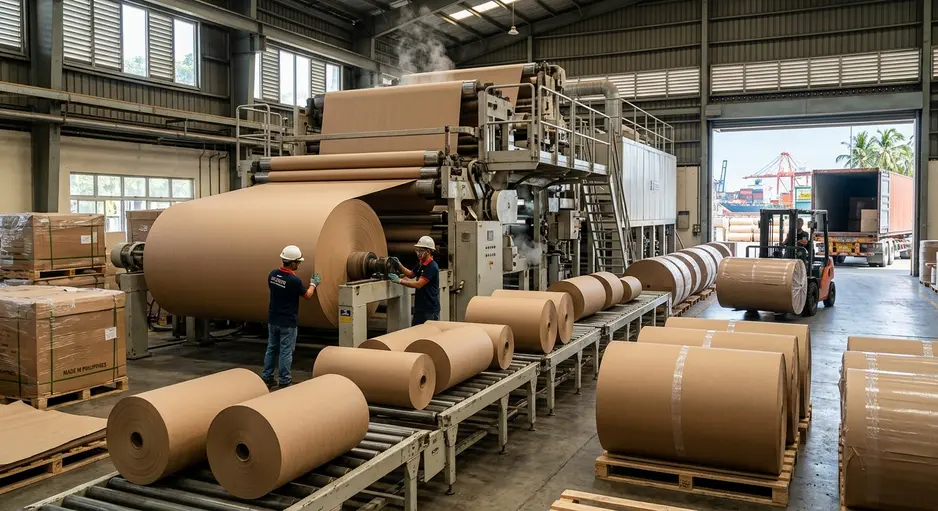
Buyers searching for a kraft board supplier Philippines can compare vendors through a simple scorecard. Review the specification match, test results, usable yield, minimum order quantity, lead time, export packing, document accuracy, and complaint process.
Questions to Ask Before Requesting a Quote
- Which grade and GSM suit the intended application?
- What are the standard production tolerances?
- Are representative samples available?
- What tests are completed for each batch?
- What is the minimum order quantity?
- Can sizes or GSM grades be combined?
- Which Incoterms are available?
- How is the board protected during shipping?
- How is repeat-order consistency managed?
Working with Edicon Paper Product
Edicon Paper Product is presented as an Indian kraft board manufacturer and export supplier for packaging buyers.
Providing full details helps the supplier review material suitability and prepare a more relevant quotation. Buyers seeking a kraft board manufacturer in Philippines should note that Edicon Paper Product is positioned as a supplier to Philippine customers rather than a local Philippine production facility.
Kraft Board Exporter in Philippines
Source Kraft Board with Clear Specifications
Successful kraft board export to Philippines requires more than comparing price and GSM. Buyers should assess strength, thickness, fibre, quality consistency, export packing, documentation, and total landed cost.
Philippine importers, carton manufacturers, distributors, and packaging companies can contact Edicon Paper Product with their required GSM, dimensions, application, quantity, destination port, and testing needs. Clear information supports sample selection and a customized export quotation.
Frequently Asked Questions About Kraft Board Imports
1. What GSM kraft board is best for carton manufacturing?
The right GSM depends on box size, product weight, stacking load, board construction, and the converting process. Test GSM together with stiffness, burst, compression, and moisture performance. A heavier grade is not always the most efficient choice.
2. Is recycled kraft board strong enough for packaging?
Yes, recycled board can suit many packaging uses. Its strength varies with fibre quality, production methods, and board construction. Buyers should compare verified test values and run conversion trials instead of making a decision based only on recycled content.
3. What is the difference between kraft paper and kraft board?
Kraft paper is usually lighter and more flexible. Kraft board has greater weight, thickness, and rigidity. Since trade terms vary, purchase specifications should clearly state GSM, caliper, fibre type, surface finish, format, and required performance.
4. Can kraft board be used for food packaging?
It may be used for some direct or secondary food packaging when the material, coatings, inks, adhesives, and manufacturing controls suit the intended use. Buyers should request applicable declarations and testing. High-moisture or fatty foods may require special barriers.
5. How can buyers prevent moisture damage?
Use moisture-barrier wrapping, clean and dry pallets, edge protection, container inspection, desiccants, and secure loading. After arrival, store the material in a dry area and allow it to adjust to production conditions before conversion when needed.